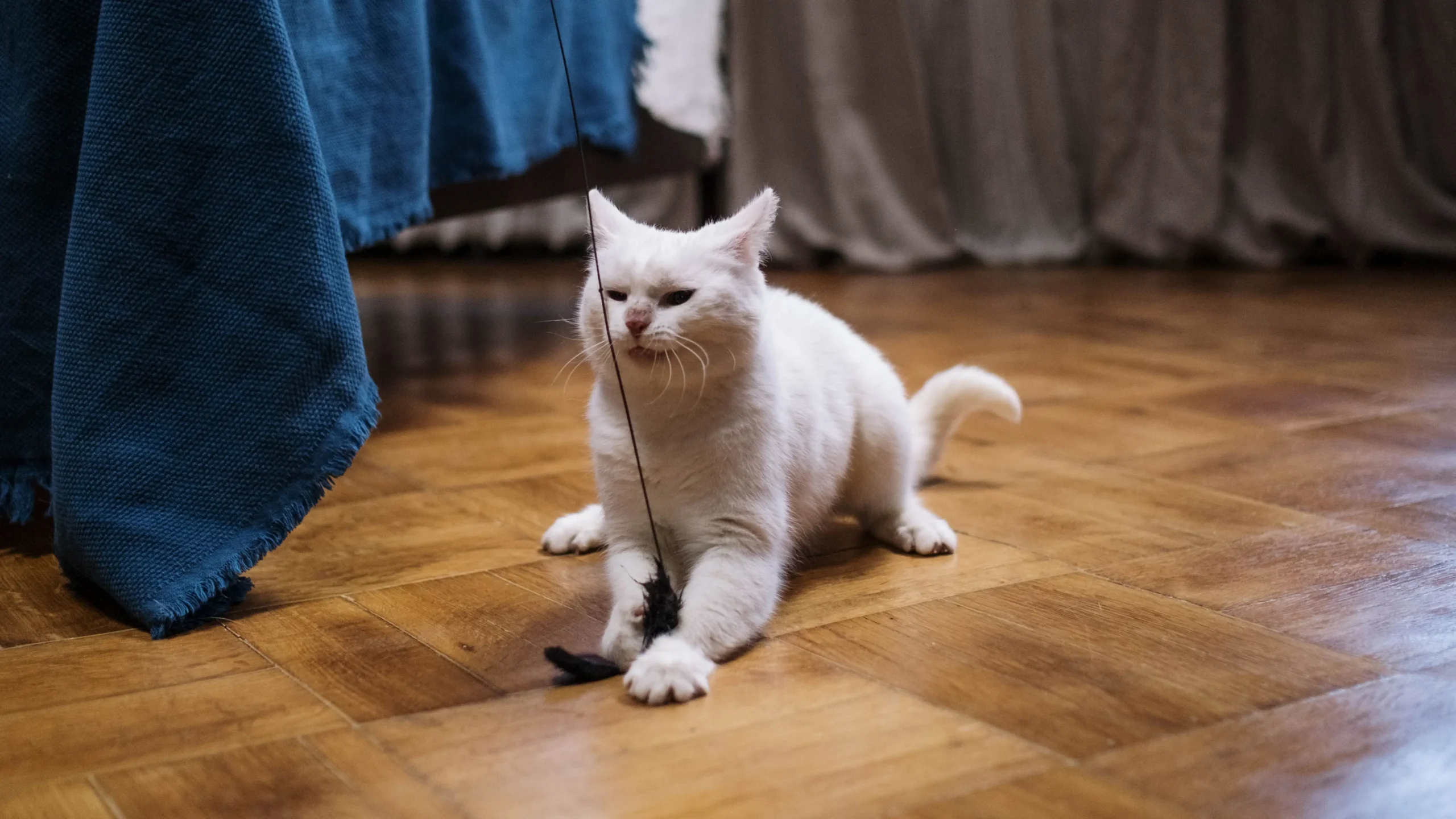
People are sometimes surprised that Moose is trained at all — there’s a lingering idea that cats can’t really be taught anything. In practice, teaching him to touch a target, walk on a harness, and use a scratching post instead of my couch just took the same reward-based approach that works on dogs, adjusted for a species that’s far less interested in pleasing anyone but itself. This guide covers cat training basics from the ground up — the actual mechanics of how cats learn, what changes by age, and where large-breed quirks like Moose’s genuinely matter. None of it requires treating a cat like a small, furry dog; it just requires understanding what actually motivates a species that’s spent a lot less of its evolutionary history being asked to take direction from people.
Understanding Cat Training Basics: Why Method Matters
A peer-reviewed study assessing clicker training in shelter cats found that cats could reliably learn new cued behaviors — touching a target, sitting, spinning, giving a high-five — within a relatively small number of short sessions, using positive reinforcement alone. Food motivation and individual temperament predicted how quickly a given cat progressed, but age and sex didn’t meaningfully affect learning ability, suggesting the method itself works broadly across different cats rather than only for naturally food-driven or bold individuals.
Getting cat training basics right, in other words, isn’t about whether a cat is “trainable” — the research suggests most are — it’s about using a method that fits how cats actually learn and what motivates them. That distinction has practical stakes too: a cat handled with punishment-based corrections is more likely to become fearful or avoidant of people generally, which can make routine handling — nail trims, medicating, vet visits — harder for years afterward, not just the specific behavior being “corrected.”
Training Needs by Life Stage
Understanding training needs by life stage helps set realistic expectations instead of assuming a kitten and an adult cat should progress the same way.
Kittens are in an active socialization and learning window during their first several weeks of life. Research on kitten training and socialization classes has found that kittens readily learn behaviors through reward-based, positive reinforcement training, and that structured early classes may support broader cognitive and social development, not just the specific cued behaviors being taught.
Adult cats can generally learn new behaviors just as reliably as kittens, contrary to the “old cats can’t learn new tricks” assumption — what usually changes is motivation and established habits, not capacity to learn.
Senior cats often still train well; if a previously reliable cat suddenly seems to “forget” a well-established routine (especially litter box use), that’s worth mentioning to a vet before assuming it’s just stubbornness or age, since sudden changes in a trained behavior can flag an underlying medical issue. Cognitive decline can play a role in some senior cats too, but it’s one possibility among several a vet can help sort out rather than a default explanation.
Positive Reinforcement Basics for Cats
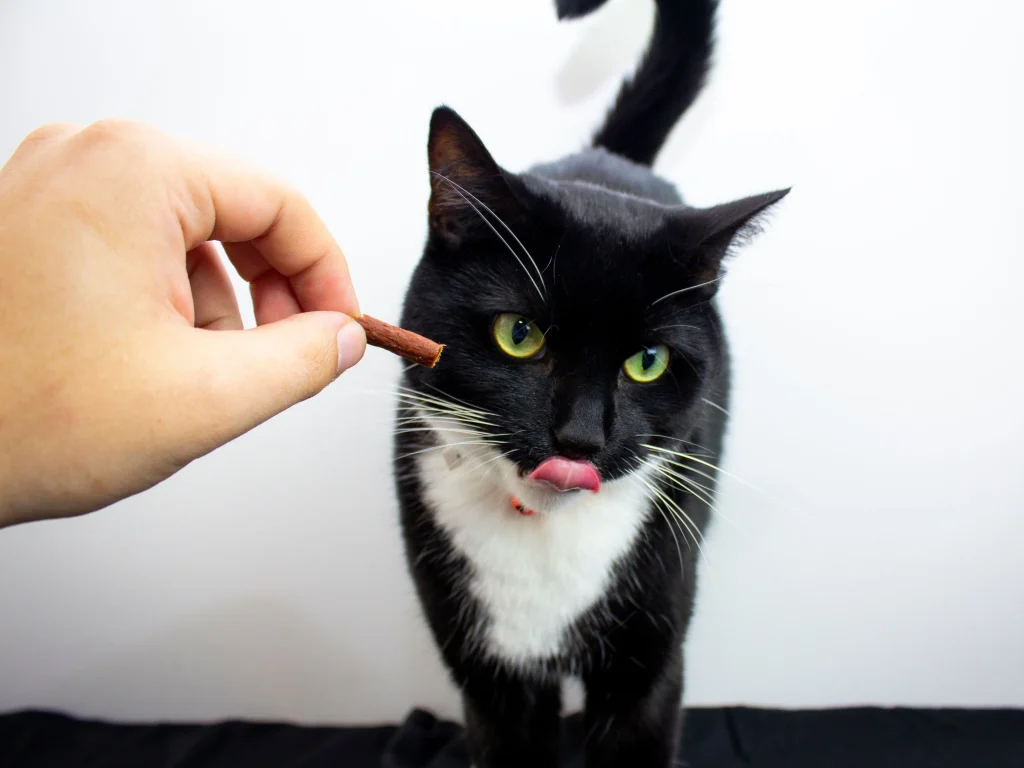
Positive reinforcement basics work the same underlying way for cats as for other species: the cat does something, something good happens immediately afterward, and the behavior becomes more likely to happen again. A few things matter especially for cats:
- Timing — cats connect a reward to a behavior only if it arrives almost immediately; a clicker or marker word bridges the gap between the behavior and the treat delivery
- Value — cats tend to be pickier about rewards than dogs; finding what a specific cat will actually work for (often a small piece of something higher-value than everyday kibble) makes training sessions far more productive
- Short sessions — a few minutes at a time, ended on a success, tends to hold a cat’s engagement better than a longer session that risks losing their interest halfway through
- No punishment — cats don’t reliably connect punishment to a specific behavior, and punishment-based corrections are more likely to create fear of the owner or the environment than to teach the intended lesson
One pattern that catches new owners off guard: a cat who’s used to getting attention (even negative attention, like being picked up and moved) for an unwanted behavior may briefly do it more, not less, once that attention stops — the same temporary uptick seen in other species before an old habit fades and a new one takes over. It’s a normal part of the process, not a sign the approach has failed.
Common Training Goals for a New Cat
Most new cat owners are working through a similar list of common training goals early on, and getting these cat training basics right tends to prevent most of the “problem behavior” complaints that come up in the first year. Each one gets a dedicated guide of its own in this cluster, but here’s the short version:
Litter box success is mostly about setup rather than “teaching” a cat to use it — a large enough box, unscented litter, a location the cat considers safe and accessible, and prompt cleaning all reduce the chance of house-soiling far more than any correction would. AAFP and ISFM guidelines on house-soiling behavior specifically note that cats should never be scolded or physically placed in a litter box as a correction, since this tends to create anxiety around the box rather than solving the underlying issue.
Scratching post use works best when the post itself matches what the cat actually wants — tall and sturdy enough not to wobble, with a texture (usually sisal) the cat prefers — combined with placing it near furniture the cat currently scratches and rewarding use of the correct surface.
Harness and leash walking takes patience most owners underestimate: letting a cat wear the harness indoors first without any leash attached, rewarding calm behavior in it, and only adding movement once the harness itself is no longer a big deal usually goes better than trying to walk a cat in an unfamiliar harness on day one.
Coming when called is a genuinely useful safety behavior for indoor cats, especially around vet carrier time or emergencies — pairing a specific word or sound reliably with a high-value reward, practiced regularly in low-stakes situations, builds a response that still works when it matters. This one pays off in ways that go beyond convenience: a cat who reliably comes when called is easier to get into a carrier calmly before a vet visit, which tends to make the whole trip less stressful for everyone involved, cat included.
Breed and Individual Training Considerations
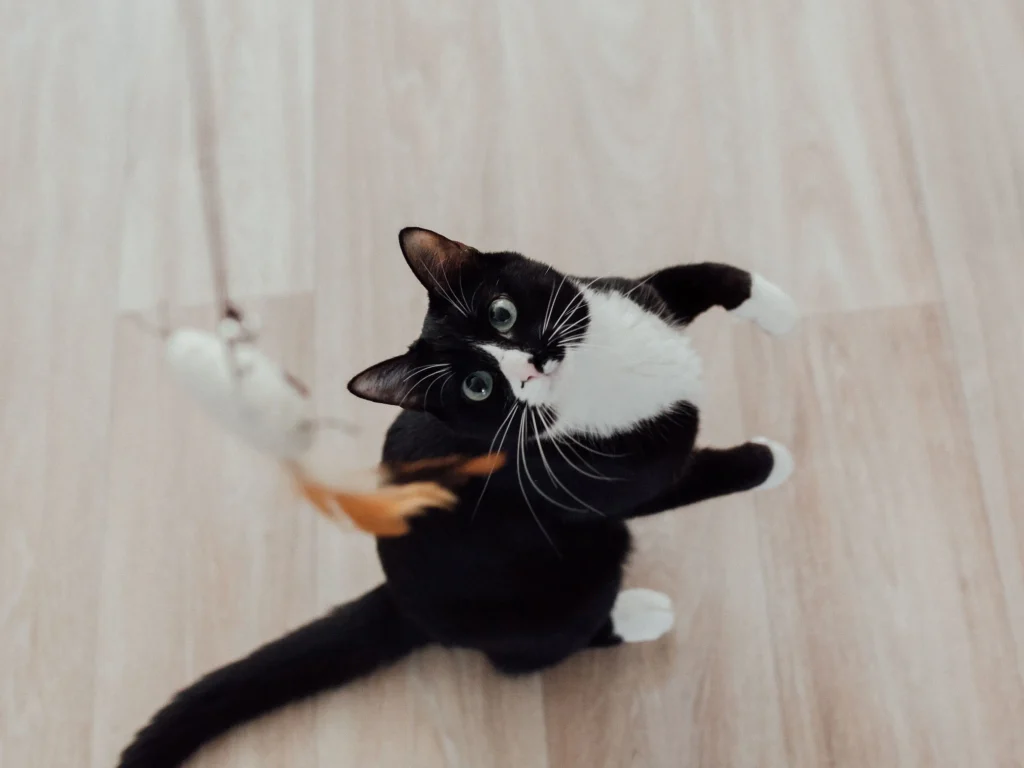
Breed and individual training considerations matter more than generic cat-training advice usually accounts for. For Moose, that’s meant a few adjustments: a standard-sized scratching post wasn’t remotely tall or sturdy enough for a cat his size, so anything he uses now has to be rated for large breeds or it gets knocked over within days. Harness fitting was its own project — most cat harnesses are sized for an average domestic shorthair, and a Maine Coon’s broader chest and longer body meant trying several brands before finding one that didn’t restrict his shoulders or slip off. Given the joint considerations we cover in our Cat Lifestyle guide for large-breed cats, I’ve also kept training exercises low-impact — target-touching and scratching post redirection rather than jump-heavy tricks that put more strain on a big cat’s joints than they would on an average-sized one.
When Training Alone Isn’t Enough
Not every unwanted behavior is a training gap, and this matters more for cats than it might for dogs. Sudden litter box avoidance, in particular, is one of the most common reasons cats get labeled “difficult” when the real cause is medical — urinary tract infections, feline idiopathic cystitis, or kidney disease can all cause a previously reliable cat to avoid the box, and no amount of retraining will fix a physical problem. If a house-trained cat suddenly starts having accidents, straining to urinate, or shows other signs of distress, a vet visit to rule out a medical cause should come before any behavioral troubleshooting.
It’s worth normalizing, too, that not every cat will master every one of these goals equally well, and that’s fine — a cat who’s a reliable litter box user but never fully warms up to a harness isn’t a training failure, just an individual with preferences like any other animal.
Where This Fits Into Everything Else on Furrowise
This pillar page is the hub for our cat Training cluster. From here, we’ll be building out more specific guides — litter box setup, scratching post buying guides, harness and leash training, and gear reviews for training tools like clickers and treat pouches. Some of that content is still in progress; the anchors below map out where each topic will eventually live.
Editorial Note: This article draws on peer-reviewed research on clicker training in shelter cats, published AAFP/ISFM guidelines on house-soiling behavior, and editorial analysis of that material. Details about Moose’s training adjustments reflect his real day-to-day routine as Maddie’s own cat, alongside general veterinary and large-breed-specific guidance — not hands-on testing of any product.
Disclaimer: This article is not veterinary or professional behavioral advice. If your cat shows sudden litter box avoidance, distress, or a significant behavior change, please consult a vet.