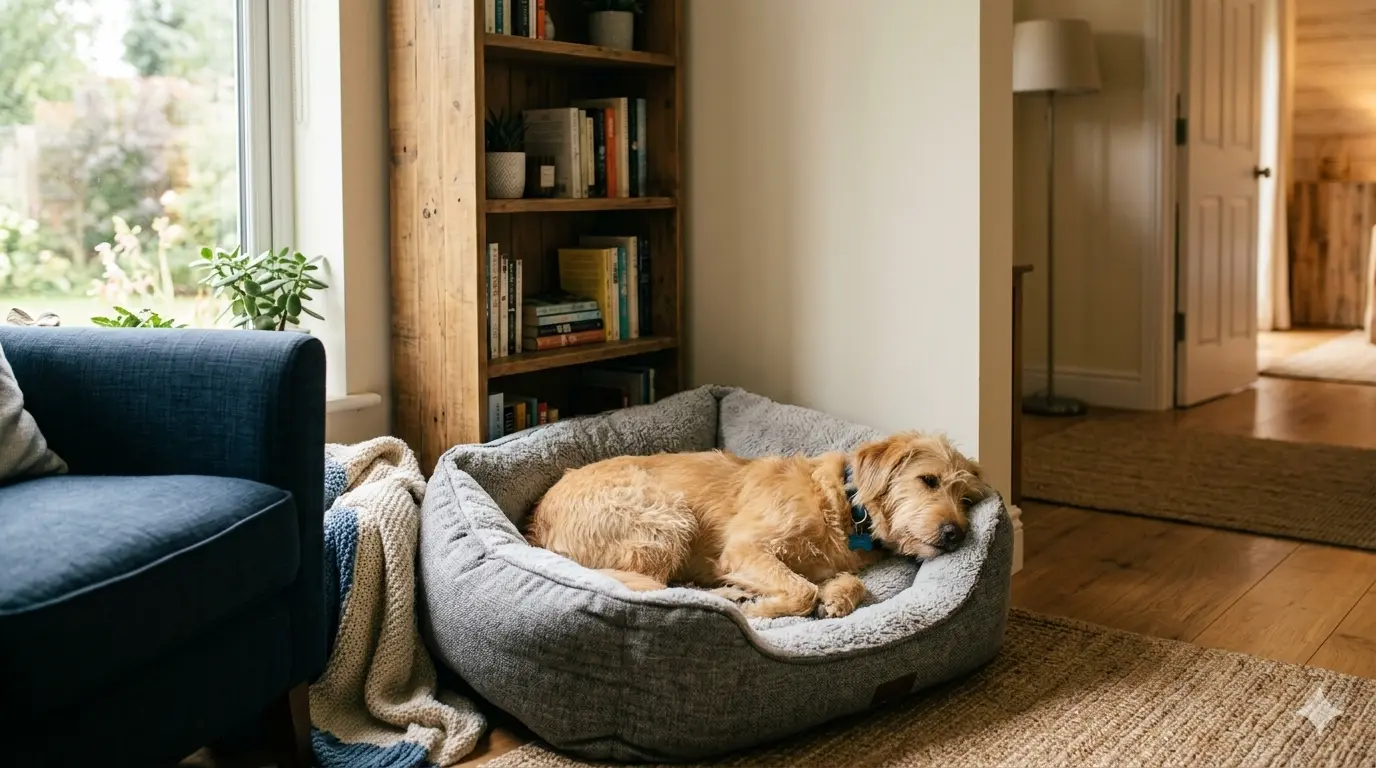
Our Dog Lifestyle Needs guide mentions rest as one of the pillars that matters as much as exercise or diet, but doesn’t get into the practical setup. This guide does — the difference between a rest space that actually gets used and a dog bed that sits empty while the dog naps on the cold tile floor instead, which is exactly what happened the first two beds I bought for Tank before I figured out what he actually wanted. None of this needs to be expensive or elaborate; it mostly comes down to matching the space to the dog rather than the other way around.
Understanding Why a Dedicated Rest Space for Your Dog Matters
Dogs sleep far more than most owners assume — adult dogs average somewhere around 12-14 hours a day, and puppies need considerably more, with some veterinary sources citing 18-20 hours for very young puppies once naps are added to overnight sleep. A rest space for your dog isn’t a luxury item; given how much of a dog’s day is spent resting, where and how well that happens has a real effect on overall wellbeing, not just comfort — a dog who’s constantly disturbed or resting somewhere uncomfortable is losing out on a genuinely large chunk of their day.
Crate vs. Open Bed: What Actually Matters
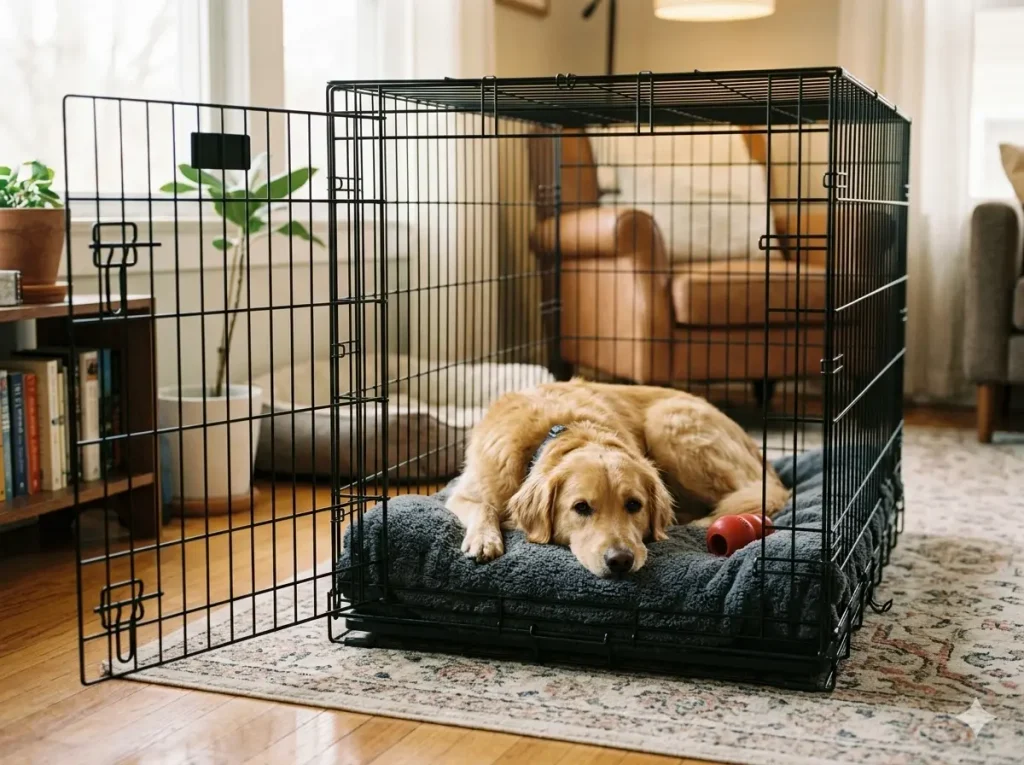
The crate-versus-bed debate gets treated as more binary than it needs to be. A properly introduced crate taps into a dog’s natural preference for a den-like, enclosed space, and can genuinely reduce anxiety for dogs who take to it — this is different from using a crate purely as a containment tool, which is a separate use case with different considerations. An open bed in a quiet corner works well for dogs who don’t need or want an enclosed space, particularly adult dogs with no anxiety-related sleep issues.
Tank ended up somewhere in between: he uses an open crate with the door almost never closed, treating it as his den-style spot of choice rather than a containment tool. That’s a completely normal outcome — plenty of dogs settle into using crate-style furniture purely as a preferred resting spot long after any active crate training has ended.
Neither option is inherently “better” — the right choice depends on the specific dog’s temperament, how the space is introduced, and whether the goal is unsupervised containment (crate) or simply a comfortable, respected resting spot (either option). Forcing a crate on a dog who’s shown clear distress in one, or assuming every dog needs an open bed instead of a den-like space, both ignore what the individual dog is actually telling you through their behavior.
Multi-Dog Households and Rest Space
Households with more than one dog need to think about rest space per dog, not just per household. Dogs don’t automatically share resting spots peacefully, and competition over a single favored bed or crate can create tension that’s easy to miss until it escalates. Providing at least as many distinct rest spots as there are dogs — even simple ones — tends to prevent this more reliably than assuming dogs will sort it out on their own.
Crate Training Timing (If You Go That Route)
For owners choosing a crate, a widely cited practical guideline suggests a puppy can typically hold their bladder for roughly their age in months plus one hour — so a three-month-old puppy might manage around four hours, which matters directly for how long an unsupervised crate stretch should realistically be. This is a general guideline rather than a guarantee for every individual puppy, and shouldn’t be treated as a target to push toward rather than a rough ceiling to stay under, since some puppies need more frequent breaks regardless of what the formula suggests.
Positive association matters more than the crate itself: feeding meals in the crate, tossing treats inside during free exploration, and never using it as punishment all build a crate a dog will voluntarily choose to enter, rather than one they tolerate reluctantly.
A common mistake is rushing the introduction — closing the door for a long stretch before a puppy has had time to get comfortable with the crate as a neutral, unlocked space. Starting with the door open, letting the puppy come and go freely for several days, and only gradually introducing short closed-door periods (starting with just a minute or two) tends to build a far more durable positive association than jumping straight to extended confinement.
Placement Matters More Than Most Owners Expect
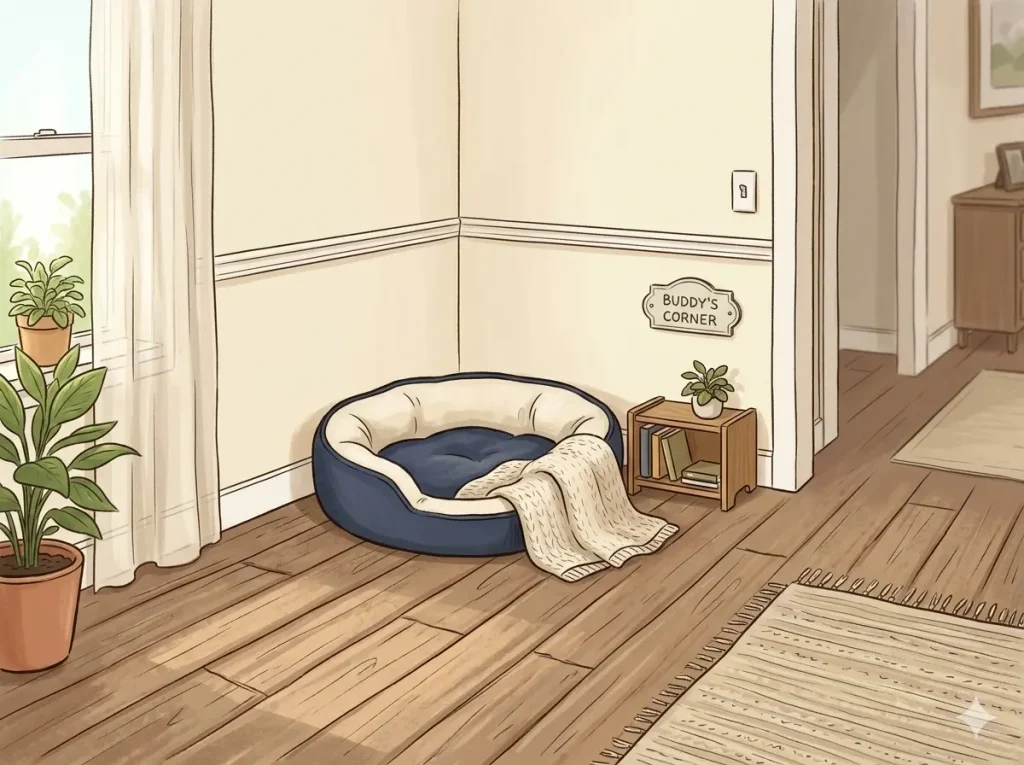
Where a rest space sits in the home affects whether it actually gets used. A spot in a constant traffic path — by the front door, in the middle of a busy kitchen — tends to get abandoned in favor of somewhere quieter, even if the bed itself is comfortable. A corner away from heavy foot traffic, ideally somewhere the dog can still see household activity without being in the middle of it, tends to get used far more consistently. Temperature matters too: a spot near a heating vent, direct sun through a window, or a drafty door can make an otherwise ideal bed uncomfortable enough that a dog chooses the floor instead.
Trial and error is a completely reasonable way to find the right spot — moving a bed to two or three candidate locations over a week or two and watching where the dog actually chooses to settle tends to reveal the answer faster than guessing based on what looks aesthetically pleasing in the room. Dogs are generally consistent about this once they find a spot they like, which makes the initial experimentation worth the effort.
Rest Space Setup for Brachycephalic Breeds
Our Brachycephalic Dog Care guide covers this in more depth, but it’s worth repeating here: for flat-faced breeds like Tank, rest space setup does double duty as temperature regulation. A cool, low-traffic rest spot isn’t just about comfort for these breeds — it’s part of managing a less efficient cooling system, especially after any exertion. Avoiding warm rooms, direct sun, and high-traffic areas matters more for a brachycephalic dog’s rest space than for the average breed. A cooling mat placed in the chosen rest spot, covered in our Brachycephalic Dog Gear Buying Guide, can make an already well-placed bed even more effective during warmer months.
Rest and Recovery After Exercise
Our Dog Exercise by Life Stage guide covers how activity needs shift across a dog’s life, and rest is the other half of that equation — a dog who’s been active needs an uninterrupted place to actually recover, not just a bed that exists somewhere in the house. Puppies in particular can become overtired and paradoxically more nippy or reactive when they haven’t had enough uninterrupted rest after active play, similar to an overtired toddler. Protecting rest time — not letting kids or other pets constantly interrupt a resting dog — matters as much as providing the physical bed itself.
This connection runs in both directions: a dog who never gets adequate rest often shows up as harder to train and more reactive during exercise sessions too, since fatigue and poor sleep quality affect impulse control and focus the same way they do in the training context our other guides cover. Treating rest as a foundational need rather than something that just happens automatically tends to improve outcomes across exercise, training, and general temperament simultaneously.
Signs the Setup Isn’t Working
A rest space that’s being ignored, a dog who seems restless or won’t settle even in a quiet space, or frequent waking and repositioning are all signs something about the current setup isn’t working — wrong location, wrong bed type, or an underlying discomfort worth ruling out with a vet if the pattern persists.
Age and health status shift what “working” looks like too. A puppy who naps in short, frequent bursts throughout the day is behaving normally, not signaling a problem with the rest space itself. A senior dog who’s started avoiding a bed they used for years, especially one that requires climbing in or jumping up, may be dealing with joint discomfort that a lower-profile or orthopedic bed could address — worth considering before assuming the dog has simply lost interest in the spot.
Where This Fits Into Everything Else on Furrowise
This guide expands on the rest section of our Dog Lifestyle Needs pillar page, and connects directly to our Brachycephalic Dog Care guide for breed-specific temperature considerations and our Dog Exercise by Life Stage guide for the activity side of the rest-and-recovery balance.
Editorial Note: This article draws on veterinary guidance on canine sleep needs and crate training practices, alongside editorial analysis of that material. Details about Tank’s rest setup reflect his real day-to-day routine as Maddie’s own dog — not hands-on testing of any product.
Disclaimer: This article is not veterinary advice. If your dog shows persistent restlessness, an inability to settle, or other sleep-related changes, please consult a vet.