Our Dog Lifestyle Needs guide touches on dog-proofing as one piece of everyday safety, but a proper checklist deserves more room than a paragraph. This one is organized by room, because that’s how dogs actually encounter hazards — not as an abstract list, but as whatever’s within reach in the specific space they’re standing in. None of this requires a complete home overhaul; most of it comes down to a handful of storage and placement habits, done consistently.
Understanding This Dog-Proofing Checklist: Why Room by Room Beats One Big List
A single long list of “things to watch out for” is easy to skim and easy to forget once it’s not in front of you. Going room by room instead means the checklist maps onto how a house actually gets used, and makes it easier to do a genuine walkthrough rather than trying to hold an abstract list in your head while looking around.
Kitchen
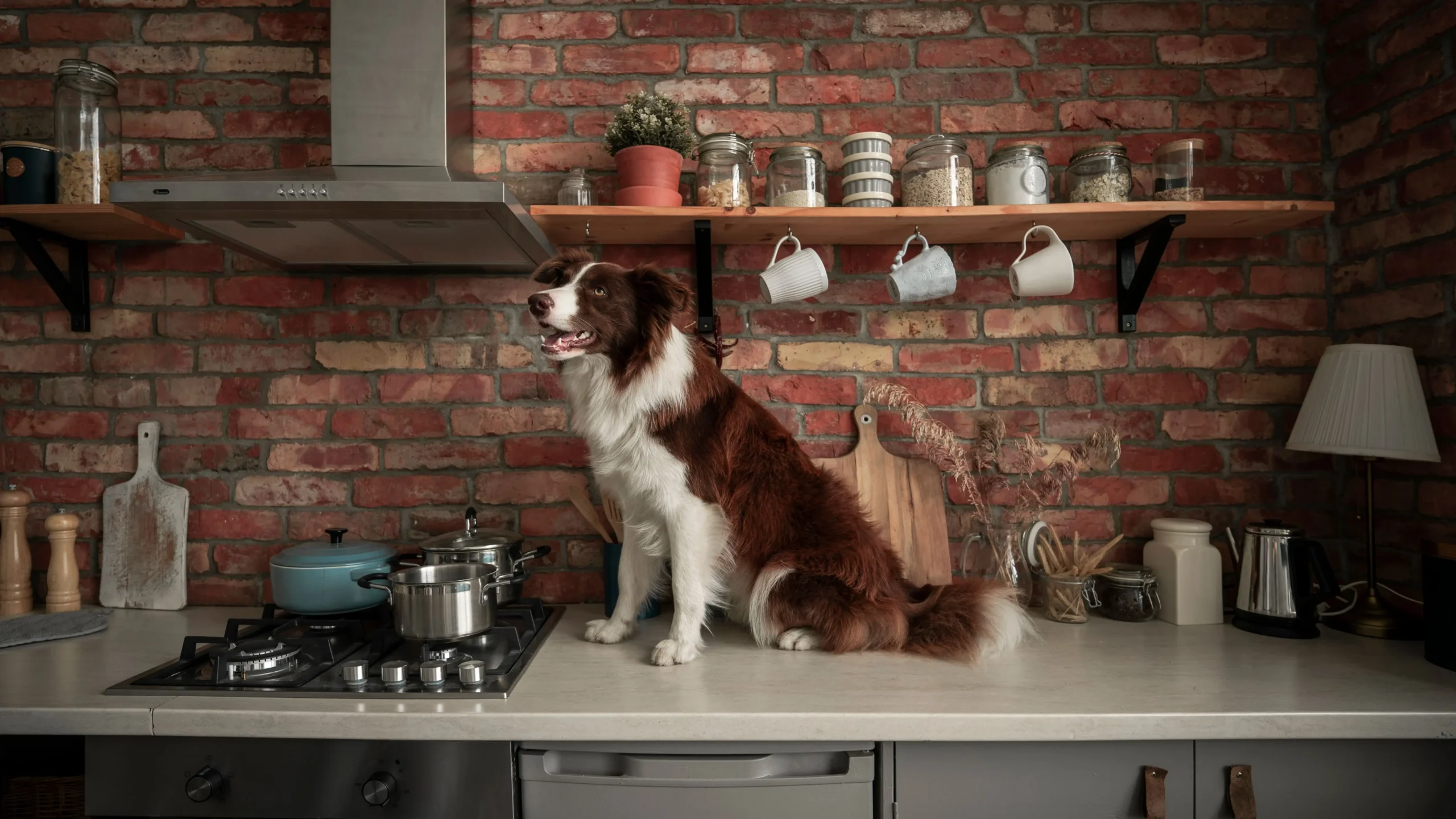
The kitchen is one of the highest-risk rooms, mostly because of food. According to ASPCA Poison Control’s most recent annual data, over-the-counter medications remain the single most reported toxin exposure category, but food and human medications together still account for a large share of calls — chocolate, xylitol (found in sugar-free gum and some peanut butters), grapes and raisins, and onions and garlic are the food items that come up constantly. All of these are worth keeping reliably out of reach, not just “usually” put away.
Countertop and table surfing is a related risk — a food-motivated dog investigating an unattended counter isn’t being naughty, they’re doing exactly what dogs do, so treating counter access as a management problem (keeping food pushed back, trash secured) tends to work better than expecting a dog to self-regulate around food smells.
A secure, ideally lidded trash can matters more in the kitchen than almost anywhere else in the house — food scraps, packaging with food residue, and cooked bones (which can splinter and cause internal injury) all end up there, and a determined dog can knock over an open bin faster than most owners expect. A step-can with a locking lid or one stored inside a latched cabinet removes this as a daily temptation rather than something to manage through willpower alone.
Bathroom and Medicine Storage
Over-the-counter medications remain the single most common toxin category in ASPCA Poison Control’s data. Ibuprofen, acetaminophen, and similar OTC medications are frequently stored in bathrooms, purses, and bags — all places a curious dog can access more easily than a closed cabinet. Keeping all medications, both over-the-counter and prescription, in a cabinet a dog genuinely cannot open (not just a low shelf) removes the single most common exposure risk in one step.
Purses, backpacks, and bags left on the floor deserve their own mention, since medications, gum (a common xylitol source), and small chewable items frequently travel through the house this way rather than staying in the bathroom where owners might expect to guard against them. Hanging bags up rather than leaving them within a dog’s reach on the floor closes off a surprisingly common exposure route that a purely room-based checklist can miss.
Living Areas
Electrical cords, small chewable objects (remote control batteries, hair ties, coins), and certain houseplants are the main hazards in shared living spaces. A number of common houseplants — lilies (especially toxic to cats but relevant in mixed-pet homes), sago palm, and certain philodendrons among others — pose a real risk if chewed, so checking a plant against a verified toxic-plant list before bringing it into a home with pets is worth the few minutes it takes.
Puppies and young dogs in a chewing phase warrant extra attention to cord management specifically — cord covers, furniture positioned to block access, or simply routing cords behind furniture rather than across open floor space all reduce both electrocution risk and the chance of an expensive damaged cable. Coins and batteries deserve particular caution since both can cause serious internal injury if swallowed, batteries especially due to chemical burns from leaking contents, not just a blockage risk.
Garage and Outdoor Areas
Antifreeze is one of the more dangerous substances in a garage specifically because it has a sweet taste dogs find appealing, and even small amounts can cause serious kidney damage. Fertilizers, de-icing products, and rodenticides (rat and mouse poison) round out the outdoor hazard list — rodenticides in particular are commonly placed at ground level, exactly where a dog is most likely to encounter them, so knowing where any pest control products are placed on a property (including ones a neighbor or landscaper may have set) matters more than most owners initially think about.
Garden and lawn products deserve a second look beyond the obvious fertilizer bag: some organic fertilizers made from bone meal or blood meal are genuinely appealing to dogs and can cause serious digestive issues if eaten in quantity, and mulch made from cocoa bean hulls contains the same toxic compound found in chocolate. None of these are always obvious hazards the way a bottle marked “poison” is, which is part of why a room-by-room walkthrough catches things a general awareness of “chemicals are dangerous” tends to miss.

Multi-Pet Household Considerations
Our Multi-Pet Household Guide covers this in more depth, but it’s worth repeating here: dog-proofing gets more complicated when a cat is also in the house, since cat litter, cat food, and small cat toys all become new categories of risk from a dog’s perspective. Litter box placement that’s inaccessible to the dog and securing small cat toys that could be a choking hazard for a larger dog are both worth adding to a mixed-household checklist specifically.
Cat food itself is worth a specific mention: it’s formulated with higher fat and protein content than dog food, and a dog who regularly raids the cat’s bowl isn’t just being a nuisance — repeated overconsumption of cat food can contribute to digestive upset and unwanted weight gain over time. Physical separation (a baby gate, an elevated feeding station, a cat door too small for the dog) tends to solve this more reliably than training a fast, food-motivated dog to leave an accessible bowl alone.
Brachycephalic-Specific Additions
Our Brachycephalic Dog Care guide covers heat and car safety in depth for flat-faced breeds, but it’s worth flagging as part of a dog-proofing checklist too: never leaving a brachycephalic dog in a parked car, even briefly, belongs on this list alongside the more commonly cited hazards above, since heat risk escalates faster for these breeds than the standard “don’t leave any dog in a hot car” advice fully conveys. Skin fold care, also covered in that guide, is worth adding to a regular home-safety routine for these breeds rather than treating it as separate from general dog-proofing.
What to Do If Exposure Happens
If a dog ingests something potentially toxic, contacting a vet or a poison control hotline immediately — rather than waiting to see if symptoms develop — gives the best chance of a good outcome, since some treatments are time-sensitive. The ASPCA Animal Poison Control Center hotline is available 24 hours a day for exactly this kind of situation, and having the number saved somewhere accessible (a phone contact, a magnet on the fridge) beats trying to find it during an actual emergency.
Having a few pieces of information ready before calling speeds up the process considerably: your dog’s approximate weight, what was ingested (including the product name or ingredient list if available), roughly how much, and how long ago it happened. Bringing the product packaging to the phone, rather than trying to describe it from memory, often helps the poison control specialist give faster, more accurate guidance. Inducing vomiting is sometimes appropriate and sometimes actively harmful depending on what was ingested, which is exactly why a call to a professional — rather than following generic internet advice — matters here more than in most other pet care situations.
Where This Fits Into Everything Else on Furrowise
This checklist expands on the dog-proofing section of our Dog Lifestyle Needs pillar page, and connects to our Multi-Pet Household Guide for mixed-species safety considerations and our Brachycephalic Dog Care guide for breed-specific hazards.
Editorial Note: This article draws on ASPCA Animal Poison Control Center’s published annual toxin data and general veterinary safety guidance, alongside editorial analysis of that material. It is not based on hands-on testing of any product.
Disclaimer: This article is not veterinary advice. If your dog has ingested a potentially toxic substance, contact your vet or a poison control hotline immediately.