
Tank came with a reputation before I even brought him home — bulldogs get called “stubborn” constantly. A few months in, what actually looked like stubbornness was mostly a food-motivated dog who hadn’t been given a reason to care about what I was asking, plus a body that overheats fast enough that a 20-minute training session in a warm room was never going to end well. Once I shortened sessions and upped the treat value, “stubborn” mostly disappeared. This guide is the starting point for everything we’ll cover under “Training” here on Furrowise — the actual mechanics of how dogs learn, what changes by age, and where breed-specific quirks genuinely matter.
Understanding Dog Training Basics: Why Method Matters
A lot of dog training advice online still frames the goal as “dominance” or “obedience,” but the research and professional consensus have moved well past that framing. The American Veterinary Society of Animal Behavior (AVSAB) has taken a formal position stating that reward-based methods should be used for all dog training, including behavior problems, and that there’s no evidence aversive methods are necessary for effective training.
That’s not just a values statement — a quasi-experimental study comparing dogs trained at reward-based, mixed, and aversive-based schools found that dogs trained with aversive methods showed more stress-related behaviors and higher post-training cortisol increases than dogs trained with rewards, with dogs trained in high-aversive environments also showing more pessimistic responses in a cognitive bias task. It’s one study, using client-owned dogs from real training schools rather than a fully controlled lab setting, but it’s among the more rigorous work available comparing these approaches head-to-head.
Getting dog training basics right, in other words, isn’t just about which method gets a behavior to stick fastest — it also affects how a dog experiences the process. That distinction matters practically too: a dog who’s stressed during training tends to be a slower, less consistent learner than one who’s relaxed and engaged, so welfare and effectiveness aren’t really competing priorities here — they tend to move together.
Training Needs by Life Stage
Understanding training needs by life stage helps set realistic expectations instead of assuming a young puppy and an adult dog should progress the same way.
Puppies are in an active socialization and learning window roughly through the first few months of life — short, frequent, low-pressure sessions (a few minutes, several times a day) tend to work better than longer, less frequent ones, partly because puppy attention spans are short and partly because early experiences shape a dog’s baseline comfort with handling, new environments, and people.
Adult dogs can generally handle longer or more complex sessions, but “adult” doesn’t mean “finished” — ongoing training keeps skills sharp and doubles as the kind of mental enrichment we cover in our Lifestyle guides. Consistency across every person in the household tends to matter more at this stage too, since an adult dog who gets mixed signals from different family members often takes longer to reliably generalize a cue than one trained with a single consistent approach.
Senior dogs often still learn well; cognitive decline can slow things down in some dogs, but age alone isn’t a reason to stop training. If a previously trained senior dog suddenly seems to “forget” well-established cues, that’s worth mentioning to a vet rather than assuming it’s just stubbornness or old age.
Positive Reinforcement Basics
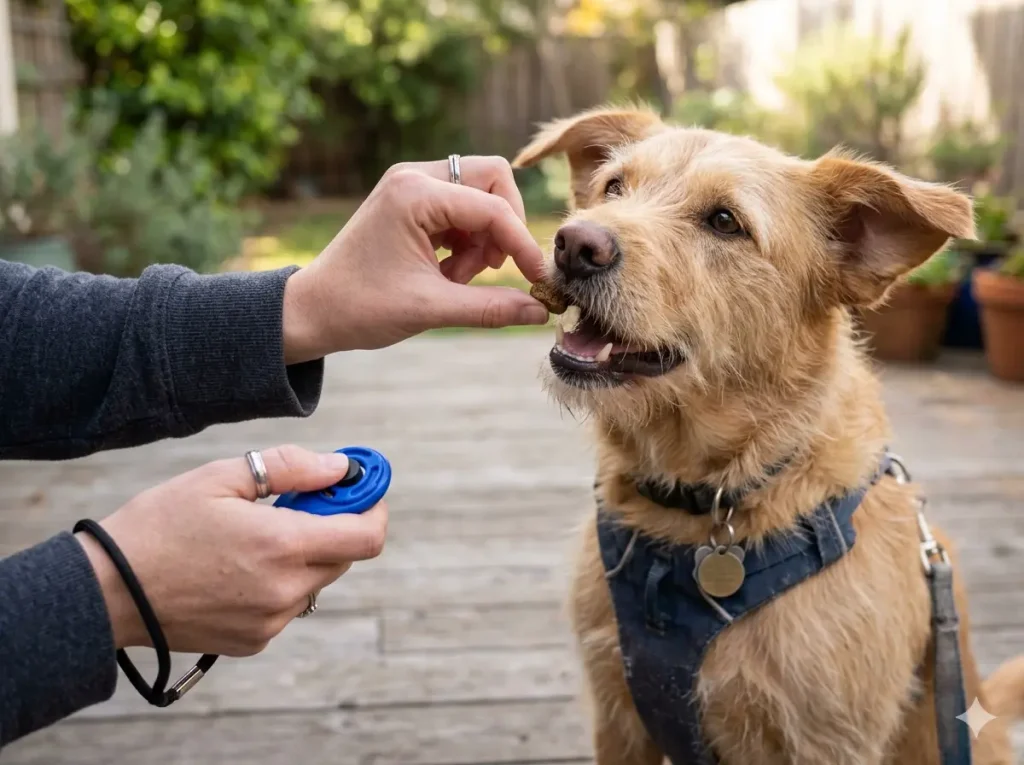
Positive reinforcement basics come down to a fairly simple mechanism: the dog does something, something good happens immediately afterward, and the behavior becomes more likely to happen again. A few things make the mechanism work better in practice:
- Timing — reward within a second or two of the behavior, or use a marker word/clicker to bridge that gap
- Value — a treat a dog will work for in a quiet living room may not be motivating enough on a busy sidewalk; higher-distraction environments usually call for higher-value rewards
- Consistency — everyone in the household reinforcing the same cue the same way avoids confusing signals
- Removing the need for punishment — if a dog isn’t succeeding, the more useful question is usually “what’s making this too hard right now” rather than “how do I correct this”
One pattern that trips up a lot of new owners: behavior often gets slightly worse right before it improves, especially when you stop reinforcing something that used to work (a dog who’s used to getting attention for jumping may jump harder for a few tries before giving up and trying something else). That temporary increase is a normal part of the process, not a sign the approach isn’t working.
Common Training Goals for a New Dog
Most new dog owners are working through a similar list of common training goals early on. Each one gets a dedicated guide of its own in this cluster, but here’s the short version of what each actually involves:
House training is mostly about management and timing rather than teaching a dog “not to go inside” — consistent schedules, frequent opportunities to go in the right spot, and rewarding success heavily tend to work faster than any correction-based approach, since a dog can’t connect a punishment to something they did five minutes ago.
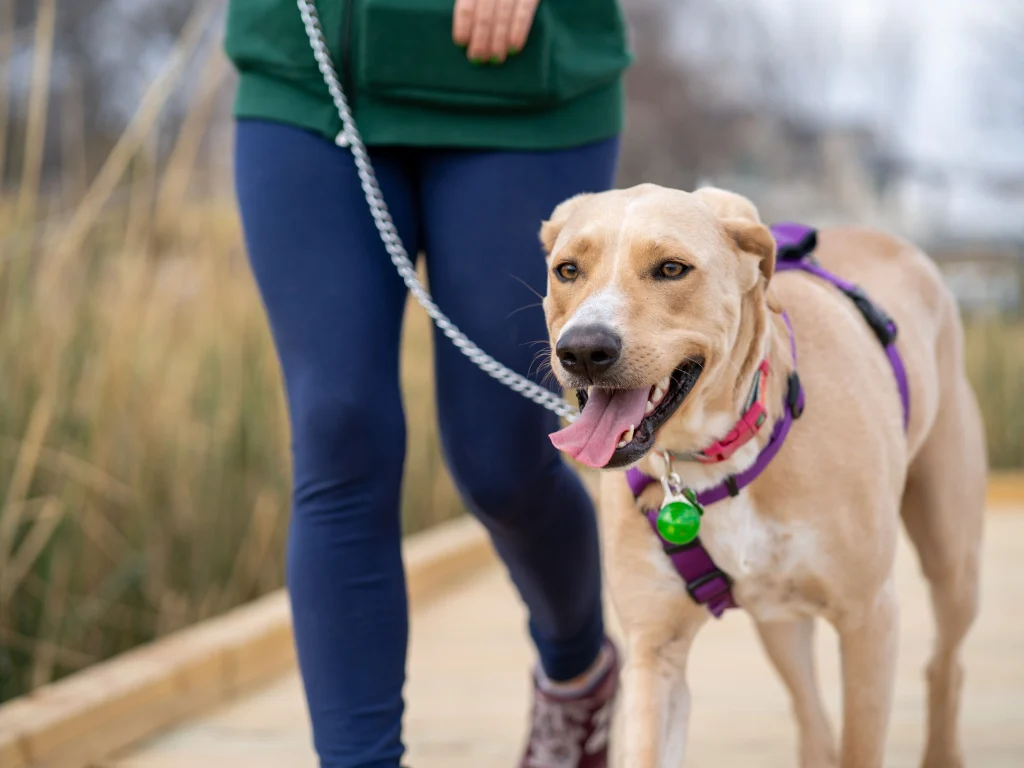
Leash manners usually means teaching a dog that a loose leash gets them where they want to go, while pulling doesn’t — practically, that often looks like stopping or changing direction the moment the leash tightens, then rewarding the dog for checking back in or walking near you.
Recall (coming when called) is one of the highest-value skills a dog can have, and one of the easiest to accidentally ruin — calling a dog only for something unpleasant (bath time, nail trims, ending playtime at the park) teaches them that coming when called is a bad deal. Keeping recall practice mostly attached to good outcomes, even if that means occasionally calling a dog just to reward them and let them go back to what they were doing, protects the behavior long-term.
Basic impulse control (sit, stay, “leave it”) tends to generalize well once a dog understands the pattern: a specific cue reliably predicts a specific consequence. Practicing these in a boring, low-distraction environment first, then gradually adding distractions, sets a dog up to actually succeed rather than fail in situations that were too hard from the start.
The underlying approach for all four goals stays the same — reward-based, split into small steps, practiced in short sessions before being asked for in harder real-world situations.
Breed-Specific Training Considerations
Breed-specific training considerations matter more than generic advice usually accounts for. For Tank, that’s meant a few adjustments: keeping sessions short and scheduled for cooler parts of the day given how quickly brachycephalic breeds like bulldogs can overheat, avoiding any equipment that puts pressure on the neck (a front-clip harness works better for him than a collar-based correction ever would, and it sidesteps added airway strain in a breed that already has less respiratory reserve), and not reading a slower response time as defiance when it might just be a dog who’s overheated or winded.
Other breed groups bring their own version of this — high-drive working breeds often need more mental and physical outlet than a five-minute session provides, while breeds bred for independence (many terriers, some scent hounds) may need extra motivation-building before recall reliability catches up to what a more biddable breed shows early.
When Training Alone Isn’t Enough
Not every unwanted behavior is a training gap. Sudden aggression, extreme fearfulness, or compulsive behaviors (persistent tail-chasing, excessive licking, and similar patterns) can have a medical or significant behavioral-health component that basic training won’t resolve on its own. If a behavior is severe, sudden, or not improving with consistent reward-based training, a certified professional dog trainer or veterinary behaviorist — and a vet visit to rule out a medical cause — is a more appropriate next step than continuing to troubleshoot alone.
It’s also worth normalizing that plenty of well-trained dogs still have occasional off days, or specific triggers that never fully resolve. The goal of training realistically isn’t a dog who never makes mistakes — it’s a dog (and household) equipped to handle the mistakes that do happen calmly and consistently.
Where This Fits Into Everything Else on Furrowise
This pillar page is the hub for our dog Training cluster. From here, we’ll be building out more specific guides — house training, leash and recall training, crate training, and gear reviews for training tools like clickers, treat pouches, and front-clip harnesses. Some of that content is still in progress; the anchors below map out where each topic will eventually live.
Editorial Note: This article draws on the AVSAB Position Statement on Humane Dog Training, a peer-reviewed comparative study on training method and welfare outcomes, and editorial analysis of that material. Details about Tank’s training adjustments reflect his real day-to-day routine as Maddie’s own dog, alongside general veterinary and brachycephalic-specific guidance — not hands-on testing of any product.
Disclaimer: This article is not veterinary or professional behavioral advice. If your dog is showing signs of aggression, severe fear, or a sudden behavior change, please consult a vet or a certified professional trainer/behaviorist.