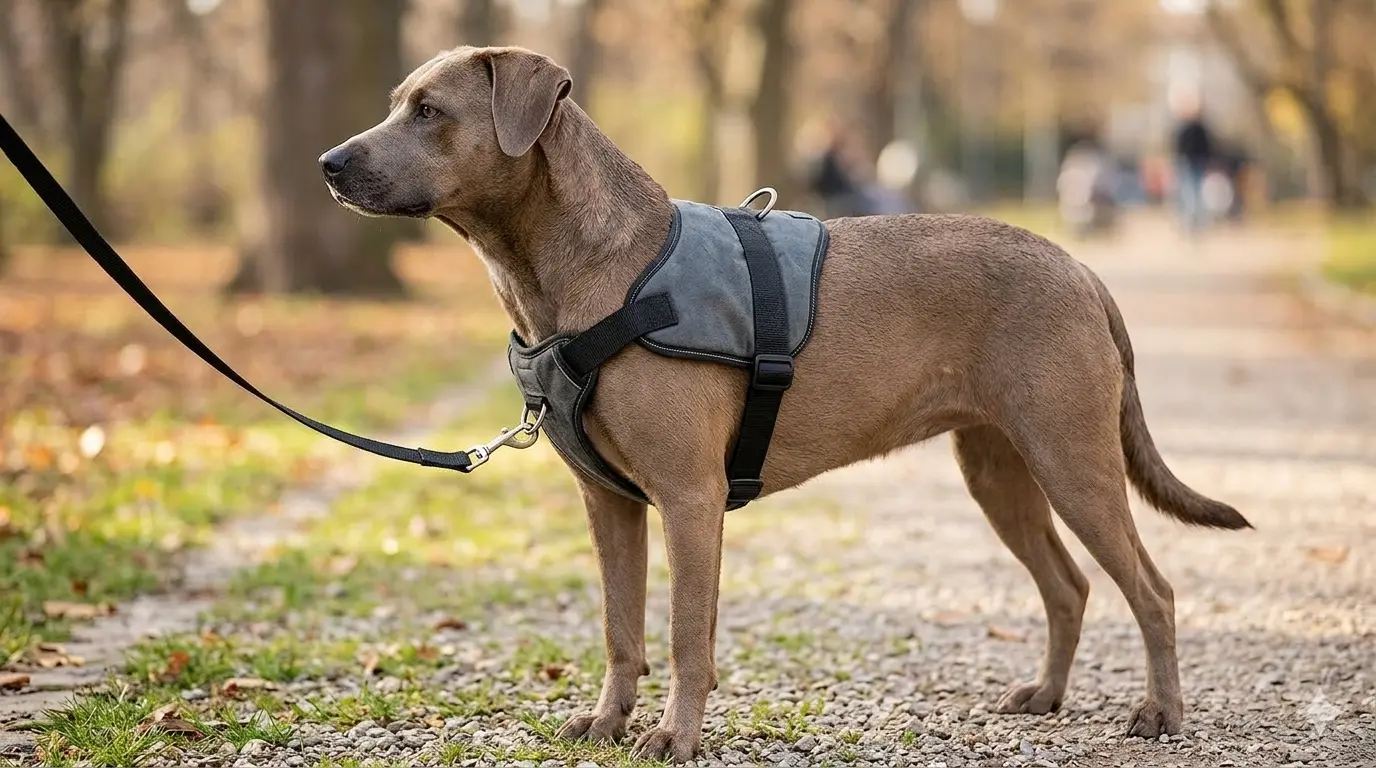
Ruffwear Front Range Harness Review: What the Data Shows
Quick Verdict: Based on manufacturer specs and aggregated owner/expert reviews, the Front Range is a durable, comfortable everyday harness with a genuine front-clip option — a reasonable pick for brachycephalic breeds if fitted by chest girth rather than the size chart’s weight suggestion. It’s not built for high-intensity running or dogs prone to escaping a harness; Ruffwear’s own lineup points toward different models for those use cases.
The Front Range is Ruffwear’s everyday harness, built around a dual-clip design — a back attachment for normal walks and a front-chest attachment intended to discourage pulling by redirecting a dog sideways rather than letting them pull straight ahead. According to the manufacturer, it’s built from ripstop fabric with foam padding across the chest and belly panels, five adjustment points, and reflective trim for low-light visibility. It ships in roughly five size options and several colorways. It’s marketed for everyday wear and moderate activity rather than intense running or technical trail use, with Ruffwear pointing owners toward a different harness in their lineup for high-output activities.
At a Glance
- Attachment points: Front (chest) and back (top), dual-clip design
- Materials: Ripstop polyester with closed-cell foam padding
- Adjustment: Five points of adjustment for a customized fit
- Best for: Everyday walks, light hikes, general training use
- Not ideal for: High-intensity running, dogs prone to slipping out of harnesses, or extremely broad-headed dogs without a fit check first
Fit and Sizing
Aggregated owner feedback and expert reviews consistently point to one fit-related theme: the Front Range tends to run slightly large, and sizing by chest girth measurement — rather than by breed or weight alone — is the more reliable approach. Reviewers who fitted the harness this way generally reported a secure, comfortable fit across a range of body types, from narrow sighthound-style builds to broader, more barrel-chested dogs. For brachycephalic breeds specifically, this matters — a chest-girth-based fit avoids the common problem of a harness sized by weight running too tight across a wider chest or too loose everywhere else.
One recurring caveat in reviews: dogs with very large heads or thick necks sometimes need the neck opening loosened further than the size chart suggests, or the harness can ride forward during use. That’s a reasonable check-before-buying item for broad-headed, short-muzzle breeds.
Materials and Durability
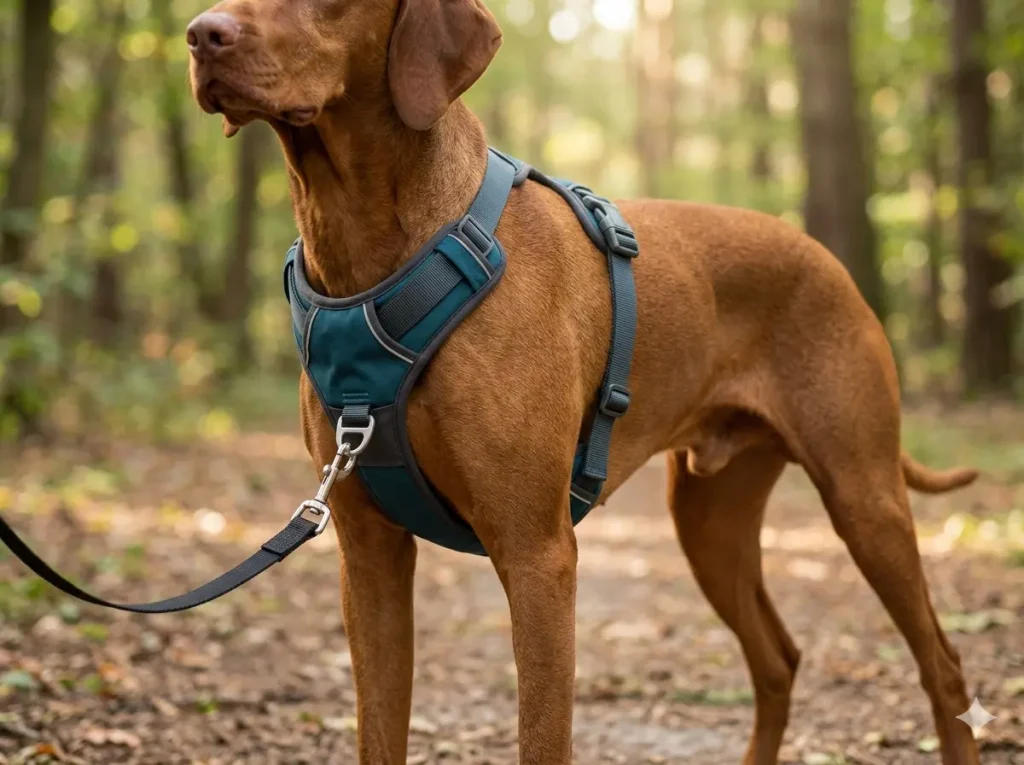
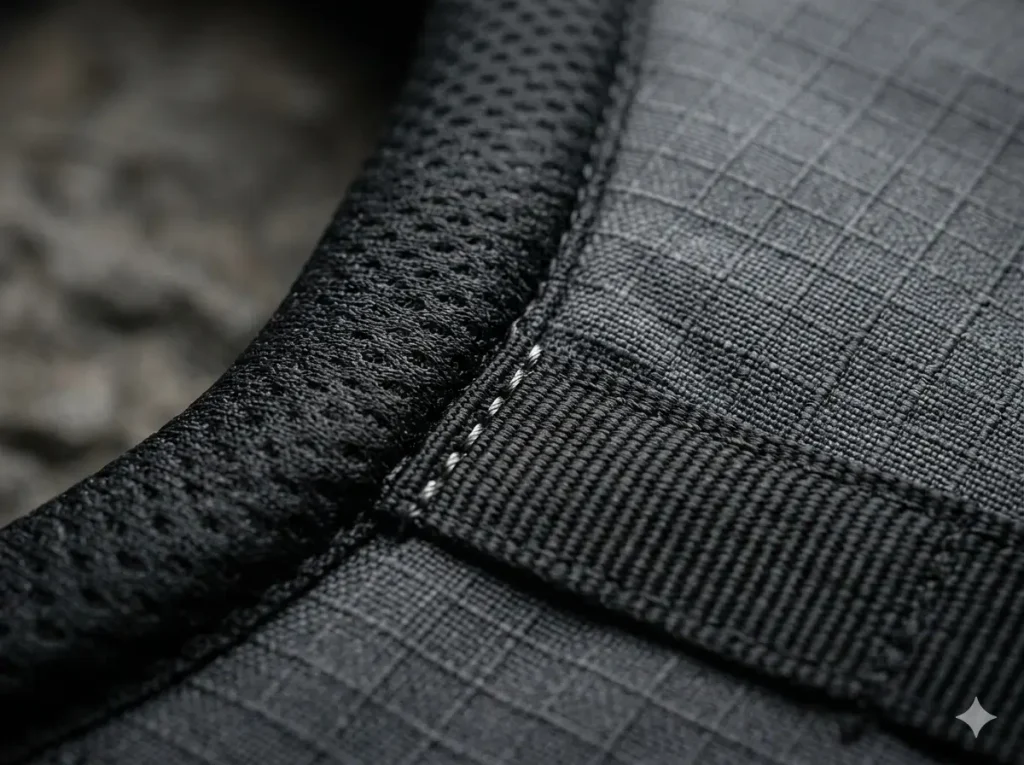
The Front Range uses a 300-denier ripstop polyester construction with closed-cell foam padding, a design combination that shows up consistently in long-term owner reports as durable under regular daily use — multiple independent reviews describe multi-year use spans (three-plus years in some cases) without structural failure, even with dogs described as high-energy or hard on gear. The closed-cell foam is also reported to resist water absorption, drying relatively quickly after wet walks or water crossings rather than staying saturated.
Comfort Features
The padded chest and belly panels are the harness’s main comfort claim, and this is corroborated across multiple independent sources describing minimal rubbing or chafing even during extended wear. Reviewers with long-haired dogs specifically note that Ruffwear extended the padding under the clip hardware, which reduces the chance of hair getting pinched in the buckles — a detail that would matter for a long-coated breed but is less relevant for short-coated brachycephalic breeds like Bulldogs or French Bulldogs.
How It Compares to Our Buying Guide Criteria
Measured against the criteria in our Brachycephalic Dog Gear Buying Guide, the Front Range checks most of the boxes on paper: a front-clip option that avoids relying on neck pressure, wide padded chest coverage, and an adjustable fit across multiple points. It does not eliminate the neck opening entirely — the harness still has a collar-like opening at the top, so the broad-headed fit caveat above is worth taking seriously for flat-faced breeds with thicker necks than the size chart assumes.
Who This Harness Is and Isn’t For
Based on the aggregated data, the Front Range looks like a strong fit for owners wanting a reliable, comfortable everyday harness for walks, light hikes, and general use — including brachycephalic breeds, provided the fit is checked carefully by chest girth rather than the size chart’s suggested weight range. It’s explicitly not designed or marketed for high-intensity running or technical trail activity; owners looking for that level of activity are directed by the manufacturer toward a different harness in the same lineup. For a dog with severe reactivity or a strong escape-artist tendency, reviewers and the manufacturer both suggest a harness with an additional chest strap offers more security than the Front Range’s simpler design.
Pros and Cons Based on Aggregated Data
Pros:
- Durable construction reported to hold up multiple years under regular daily use, including with high-energy dogs
- Padded chest and belly panels reduce chafing risk during extended wear
- Genuine front-clip attachment for pulling redirection, without relying on neck pressure
- Foam padding dries quickly and doesn’t appear to absorb odor after getting wet
- Reflective trim adds some low-light visibility for evening walks
Cons:
- Runs slightly large according to multiple sources, making a careful chest-girth measurement more important than usual
- Not designed for high-intensity running — Ruffwear directs runners toward a different model
- Less secure than escape-resistant designs for dogs with a strong history of slipping harnesses
- Broad-headed or thick-necked dogs may need extra adjustment at the neck opening to avoid the harness riding forward
Alternatives Worth Knowing About
Ruffwear’s own lineup includes two harnesses that come up repeatedly in comparisons to the Front Range. The Webmaster adds an additional chest strap for extra security, making it a common recommendation for reactive dogs or known escape artists, at the cost of being more involved to put on. The Hi & Light is generally recommended over the Front Range specifically for running, since it’s built lighter and designed around sustained high-output movement rather than everyday wear. For most brachycephalic dog owners doing standard walks and light activity, the Front Range’s balance of comfort, durability, and price tends to be the more practical starting point unless one of these specific needs applies.
Price and Value
The Front Range sits in the mid-range price tier for dog harnesses — more expensive than basic big-box options, but positioned below premium technical harnesses built for working or sporting dogs. Given the multi-year durability reports and included dual-clip functionality, the aggregated reviews generally frame it as good value for an everyday harness rather than a premium or budget pick specifically — you’re paying for consistent quality and a design that’s held up well across a wide range of dog sizes and activity levels, not for specialized technical features.
Frequently Asked Questions
Is the Front Range good for brachycephalic dogs specifically? Based on the criteria in our Brachycephalic Dog Gear Buying Guide, yes with one caveat: broad-headed, thick-necked dogs (common in this breed group) should size by chest girth and check the neck opening fit carefully before assuming a standard size will work.
How long does it typically last? Independent long-term reviews report multi-year use — one reviewer documented over three years of daily use with a high-energy dog before replacement was needed, though individual durability will vary with activity level and how the harness is cared for.
Can it fully stop a dog from pulling? No harness eliminates pulling on its own. The front-clip attachment makes pulling physically awkward by redirecting the dog sideways, which tends to reduce pulling intensity over time, especially combined with basic leash training — but it’s a management tool, not a substitute for training.
Is it machine washable? Manufacturer guidance and aggregated care instructions point to hand-washing in cold water with a mild detergent, air-drying rather than machine washing or drying, which helps preserve the foam padding and hardware over time.
Where This Fits Into Everything Else on Furrowise
This review is part of our brachycephalic gear cluster, alongside our Brachycephalic Dog Gear Buying Guide and Brachycephalic Dog Care Guide, which cover the broader reasoning behind harness selection and daily care for flat-faced breeds.
Editorial Note: This review is based on manufacturer product specifications and a synthesis of publicly available owner and expert reviews, not hands-on testing by Maddie. It is explicitly framed as a Clinical/Research Data Review, consistent with Furrowise’s two-track review policy — this product has not been purchased or tested on Tank or Moose.
Disclaimer: This article is not veterinary advice. If your dog shows signs of discomfort, chafing, or breathing difficulty while wearing any harness, discontinue use and consult a vet.