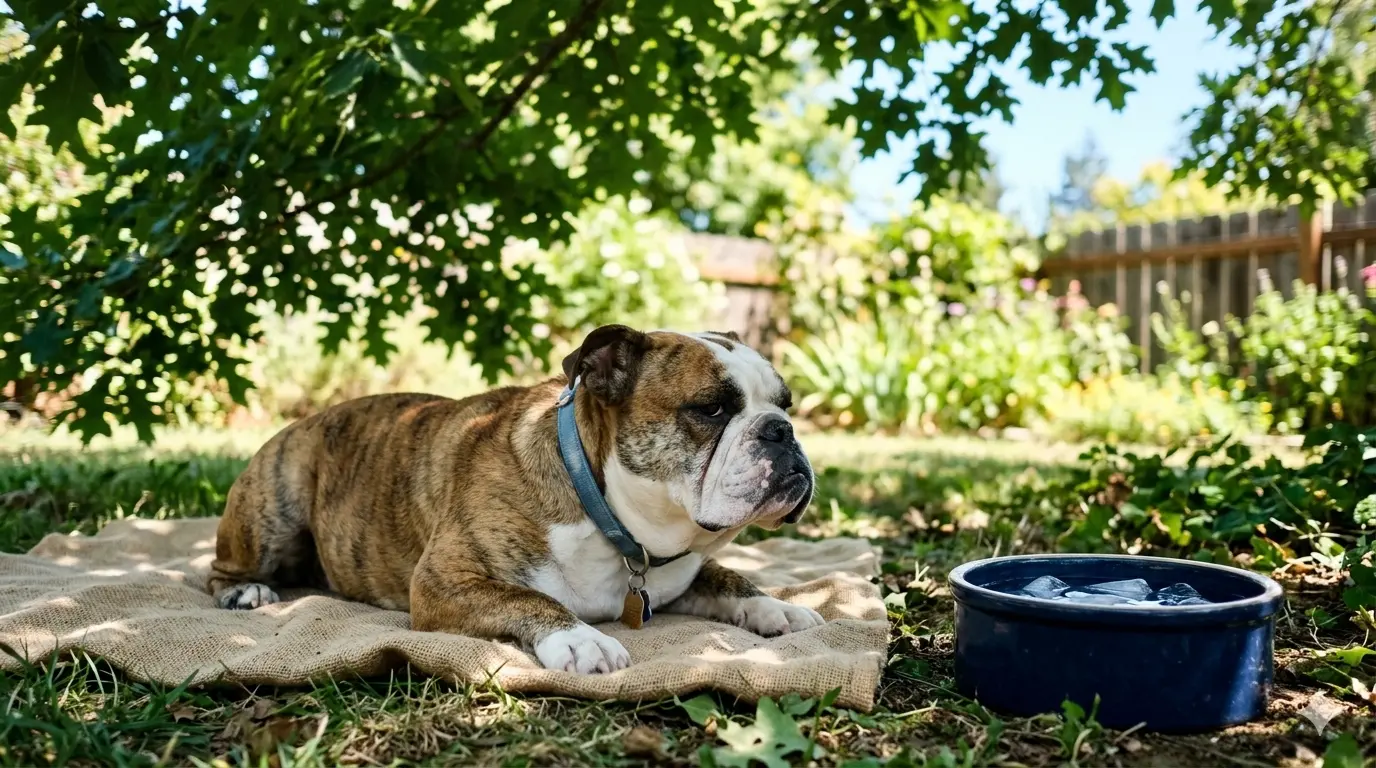
Tank shows up in a lot of our other guides as an example, and there’s a reason for that — being a bulldog changes enough about his day-to-day care that it deserves its own guide instead of a few scattered mentions. This pulls together what we’ve touched on in our Dog Lifestyle and Dog Training pillar pages and goes deeper: the anatomy behind why brachycephalic dogs need different handling, the exercise and heat adjustments that actually matter, and the warning signs that mean it’s time to stop troubleshooting and get to a vet.
Understanding Brachycephalic Dog Care: What Makes These Breeds Different
“Brachycephalic” refers to the shortened skull and muzzle shape seen in breeds like Bulldogs, French Bulldogs, Pugs, and Boston Terriers. That flattened structure often comes packaged with Brachycephalic Obstructive Airway Syndrome (BOAS) — a cluster of anatomical features (narrowed nostrils, an elongated soft palate, a narrowed windpipe) that together make it harder for these dogs to move air efficiently. A peer-reviewed study assessing conformational risk factors for BOAS found that stockier body shape and narrower nostrils were both linked to more severe airway obstruction signs, and that the condition existed on a spectrum rather than being present or absent — most brachycephalic dogs have some degree of it, not just the visibly distressed cases people picture.
This matters for brachycephalic dog care because it reframes a lot of behavior that looks like laziness or stubbornness: a dog who stops on a walk, breathes loudly at rest, or seems reluctant to keep going isn’t necessarily being difficult — there’s a reasonable chance their airway is working harder than a longer-nosed dog’s would be doing the same activity.
Exercise Adjustments That Actually Matter
Our Dog Lifestyle guide covers general exercise needs by life stage, but brachycephalic breeds need a layer on top of that general guidance. Shorter, more frequent activity tends to work better than one long outing, since it gives a dog more recovery time between exertion periods. Timing matters as much as duration — early morning or evening, avoiding the hottest and most humid parts of the day, tends to matter more for these breeds than for a longer-muzzled dog doing the same walk. Watching for early signs of struggling (excessive panting, slowing down, seeking shade or lying down mid-walk) and stopping before those signs escalate protects a dog who can’t verbally tell you they’re struggling.
Heat and Temperature Safety
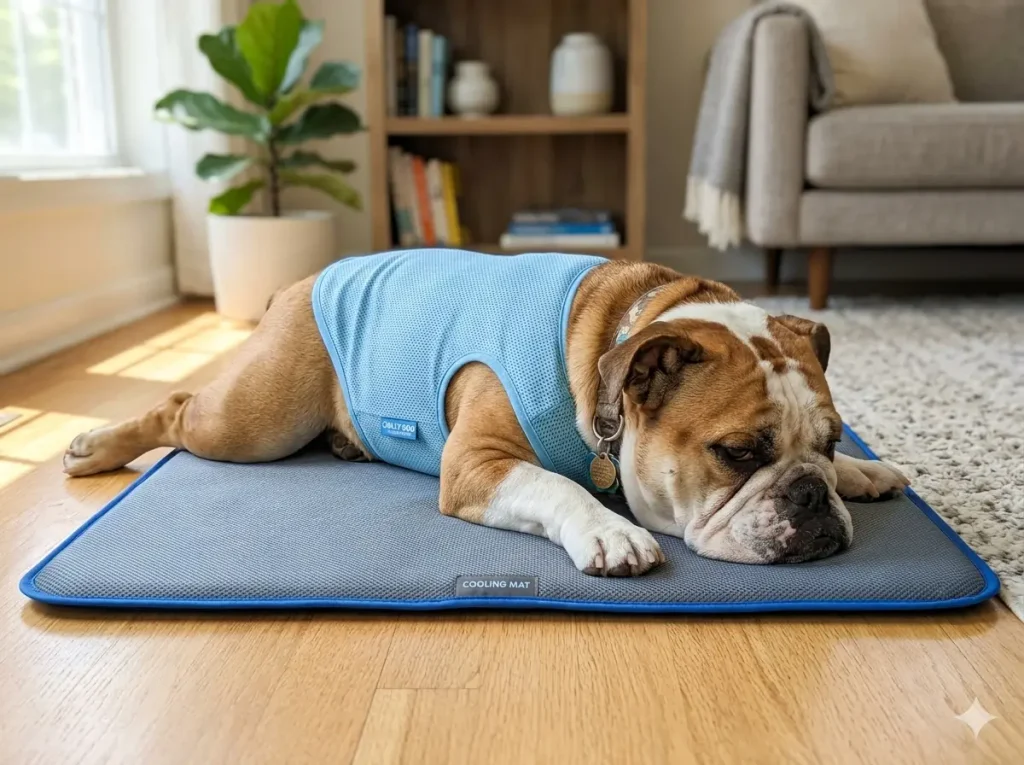
Heat and temperature safety deserves its own section here because the stakes are measurably higher for this breed group. A large peer-reviewed study of UK veterinary records found that brachycephalic breeds — Bulldogs in particular — had meaningfully elevated rates of heat-related illness compared to other breeds, with body weight and age also contributing to individual risk. Practically, that translates to a short list of non-negotiables:
- Never leave a brachycephalic dog in a parked car, even briefly, even with windows cracked — interior temperatures climb faster than most owners expect, and this breed group has less tolerance for that heat buildup than others
- Provide constant access to water and shade during any outdoor time, and treat “seeking shade unprompted” as a sign to head back inside rather than push further
- Avoid exercise entirely during peak heat hours, shifting walks to early morning or evening in warm months
- Consider cooling mats, cooling vests, or simply more frequent indoor breaks during hot weather, rather than assuming a shorter walk alone is enough of an adjustment
Panting is a brachycephalic dog’s primary cooling mechanism, and it’s a meaningfully less efficient one than in dogs with a normal muzzle length — which is exactly why the margin for error runs narrower.
Training Adjustments for Brachycephalic Dogs
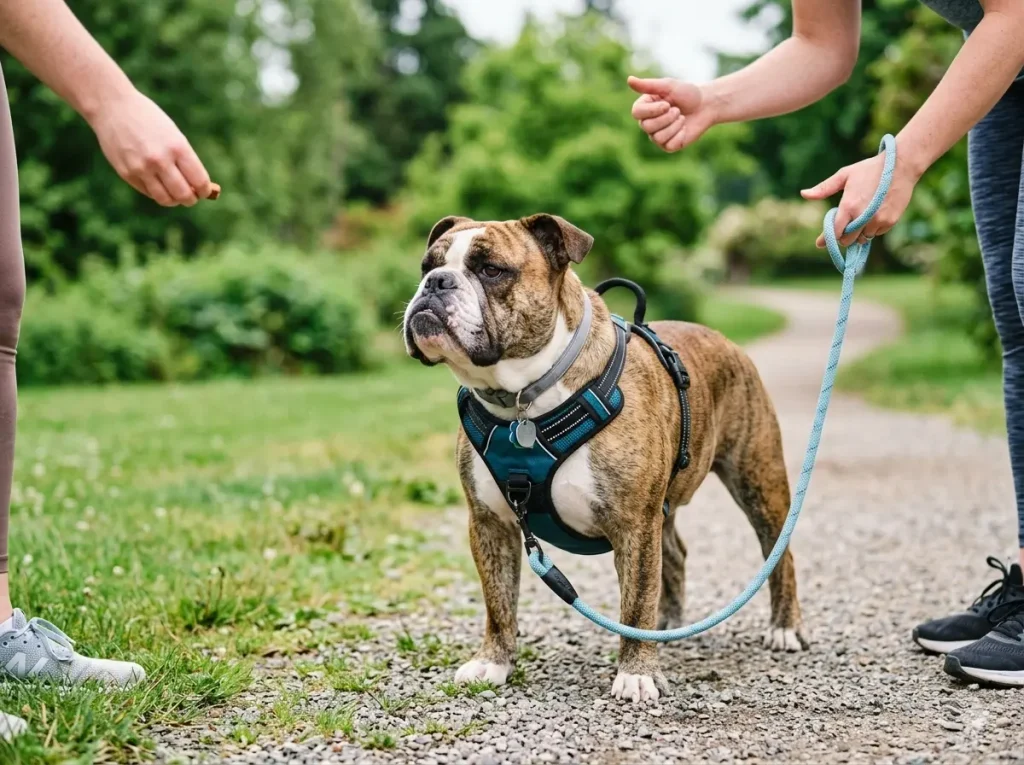
Our Dog Training guide covers positive reinforcement basics broadly, and most of that applies here unchanged — reward-based methods work the same way regardless of breed. What changes is session structure and equipment. Shorter sessions, scheduled for cooler parts of the day, prevent a dog from overheating before training even starts. Equipment choice matters more here than for most breeds: any harness or collar that puts pressure on the neck adds strain to an airway that already has less reserve, which is why a well-fitted front-clip harness is generally a safer default than a collar-based correction tool for this breed group.
Skin Fold and Grooming Care
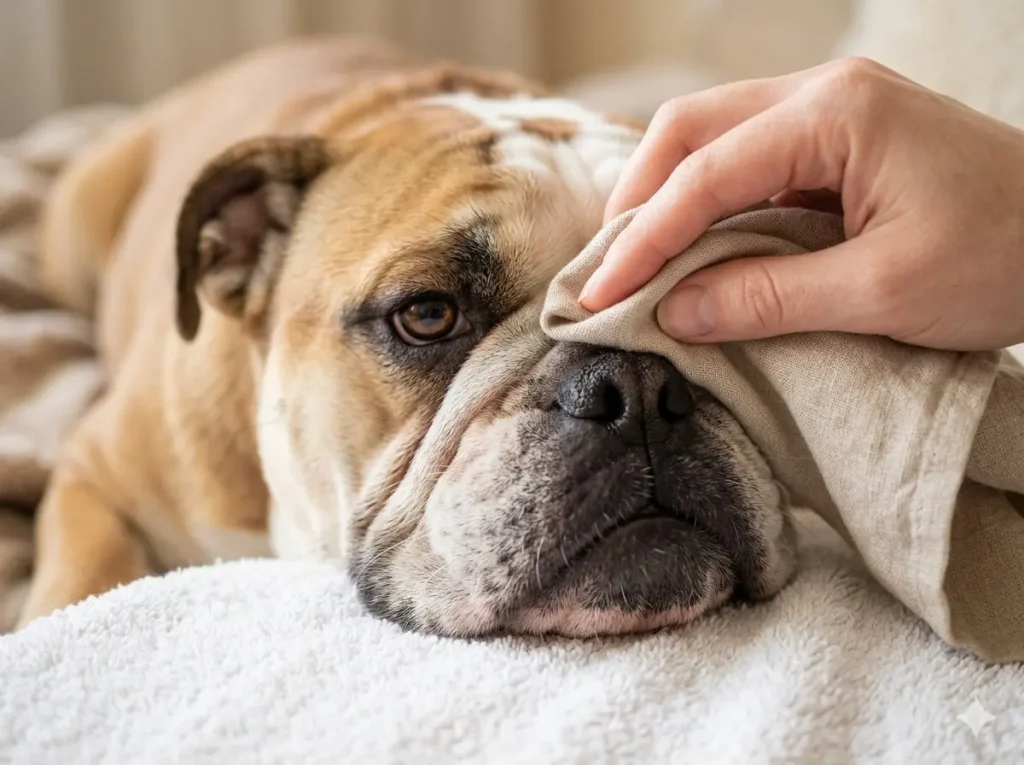
Skin fold care is a maintenance task that simply doesn’t exist for smooth-coated breeds, and it’s easy to underestimate how much upkeep it needs. Facial and body folds trap moisture, debris, and bacteria if left unchecked, which can lead to irritation or infection over time. Regular cleaning (a few times a week for most dogs, more often in humid climates) with a vet-recommended wipe or diluted cleanser, followed by thorough drying, is the core of preventing problems before they start. Redness, odor, or visible discomfort when a fold is touched are signs it’s time for a vet check rather than more at-home cleaning.
Recognizing a Brachycephalic Emergency
Recognizing a brachycephalic emergency early can be genuinely life-saving, since these dogs have less physiological reserve to draw on before a situation becomes critical. Labored or noisy breathing that doesn’t settle with rest, blue or gray-tinged gums or tongue, collapse, or extreme distress after mild exertion or heat exposure are not “wait and see” situations — they warrant immediate veterinary attention. Because brachycephalic dogs can decompensate faster than other breeds once heat stress or airway obstruction becomes severe, erring toward urgent care rather than a wait-and-monitor approach is the safer default with this breed group specifically.
Eye and Dental Considerations
Two other anatomical quirks come with the same shortened skull that causes airway issues, and they’re worth knowing even though they’re a separate topic from breathing. Shallow eye sockets in many brachycephalic breeds leave the eyes more exposed and prominent than in longer-muzzled dogs, which raises the risk of corneal scratches and ulcers — something as simple as brushing past a low branch can cause an injury that would just bounce off a deeper-set eye. Squinting, excessive tearing, redness, or pawing at an eye are worth a same-day vet check rather than a wait-and-see approach, since corneal damage can worsen quickly. Dental crowding is the other common issue: a shortened jaw still has to fit a full-size set of teeth, which often leads to misalignment and crowding that can trap food and increase the risk of dental disease over time, making regular dental checks and home dental care more important than they might be for a dog with a more typical jaw length.
Individual Variation Within the Breed Group
Not every brachycephalic dog is affected to the same degree, and it’s worth resisting the assumption that a specific dog will show every issue described here. Severity exists on a spectrum — some dogs breathe relatively easily and tolerate moderate exercise and warm weather without much trouble, while others struggle with basic daily activity even in mild conditions. Tank sits somewhere in the middle: fine on cool mornings, noticeably more labored by midday in summer. Getting a sense of where an individual dog falls on that spectrum, ideally with a vet’s input, matters more than applying a one-size-fits-all restriction based on breed alone.
Choosing Gear for Brachycephalic Dogs
A few gear choices consistently make daily life easier for brachycephalic dogs: a well-fitted front-clip or Y-shaped harness instead of a neck collar, a raised or slow-feeder bowl for dogs prone to gulping air while eating, and portable water/cooling gear for warm-weather outings. Harness fit deserves particular attention with this breed group — many off-the-shelf harnesses are cut for a more standard body shape, and a bulldog’s broad chest and short legs mean a harness sized by weight alone often ends up either too tight across the chest or loose enough to slip. Trying a harness indoors first, checking that a hand slides comfortably under every strap, and watching for rubbing after short trial walks helps catch a poor fit before it becomes a chronic irritation. We’ll cover specific product recommendations in a dedicated buying guide.
Where This Fits Into Everything Else on Furrowise
This guide connects directly back to our Dog Lifestyle and Dog Training pillar pages, both of which touch on Tank’s brachycephalic-specific needs without going deep on the underlying anatomy or the full exercise/heat/training picture. From here, we’ll be building out a brachycephalic gear buying guide and reviews of cooling products and front-clip harnesses.
Editorial Note: This article draws on peer-reviewed research on BOAS conformational risk factors and brachycephalic heat-related illness risk, alongside editorial analysis of that material. Details about Tank’s care routine reflect his real day-to-day needs as Maddie’s own dog — not hands-on testing of any product.
Disclaimer: This article is not veterinary advice. If your dog is showing labored breathing, blue or gray gums, collapse, or severe distress, please seek veterinary care immediately.