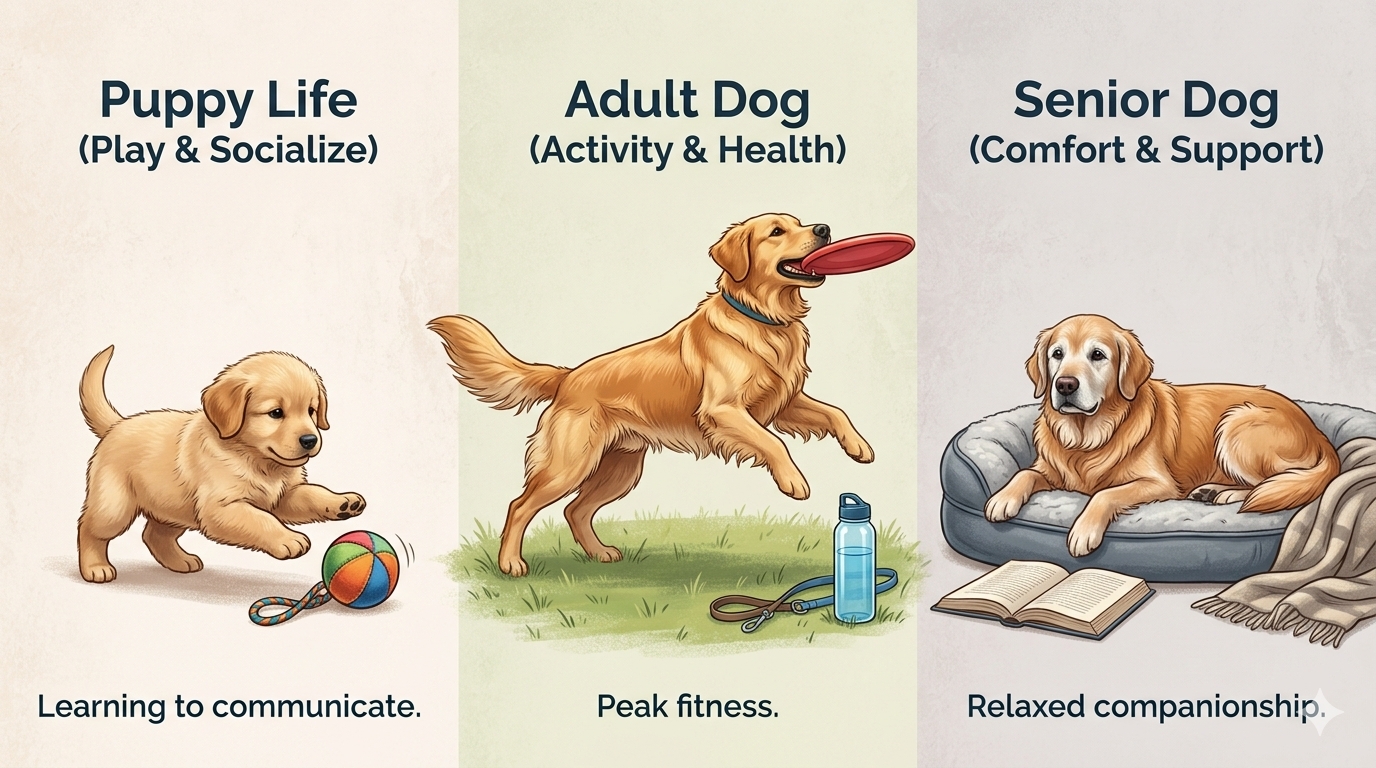
Our Dog Lifestyle Needs guide touches on exercise as one piece of a bigger picture, but it’s worth its own deep dive — because “how much exercise does my dog need” genuinely doesn’t have one answer. It changes as a dog grows, changes again as they age, and changes yet again depending on breed and body type. This guide walks through what actually matters at each stage, based on veterinary and rehabilitation guidance rather than the generic “an hour a day” advice that gets repeated everywhere, regardless of the dog actually reading it.
Understanding Dog Exercise by Life Stage: Why One Size Doesn’t Fit All
The biggest mistake in dog exercise advice is treating a dog’s needs as static. A growing puppy, a physically mature adult, and a senior dog managing early joint changes are working with completely different bodies, even if they’re the same individual a few years apart. Matching exercise type and intensity to what a dog’s body can actually handle at that stage protects against two opposite failure modes: under-exercising a dog who needs more outlet than they’re getting, and pushing a body — growing or aging — past what it can currently tolerate.
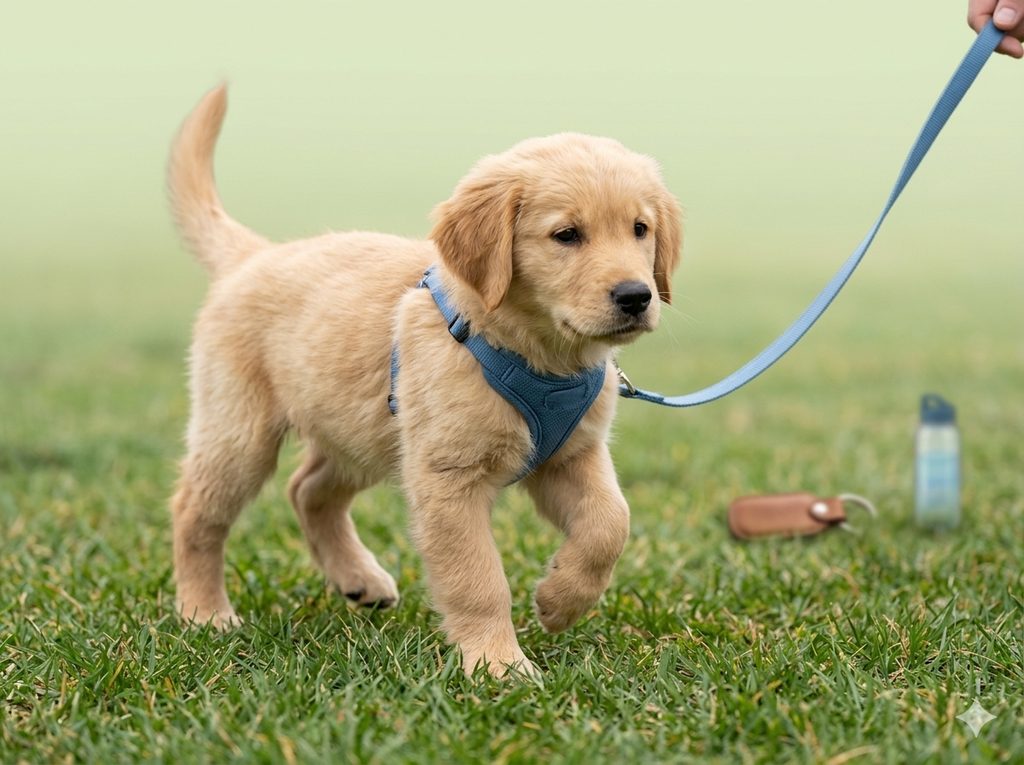
Puppies: Growth Plates and the Case Against Over-Exercising
Puppy bones grow from soft, cartilage-like areas called growth plates, located near the ends of long bones. According to veterinary guidance, these plates remain open and vulnerable to injury until a dog reaches skeletal maturity — which happens earlier in small breeds (sometimes by 6-8 months) and considerably later in large and giant breeds (into the 12-18 month range, occasionally longer). Repetitive high-impact activity during this window — jogging on hard pavement, repeated jumping, structured agility work — carries a real risk of growth plate injury, which can affect how a limb develops long-term.
Practically, that means puppy exercise should favor short, frequent, low-impact sessions over long or high-impact ones: free play, gentle leash walks, and supervised exploration rather than mile-long runs or repeated fetch on hard surfaces. Growth plate closure timing varies enough by individual and breed that when in doubt, checking with your vet — who can assess joint development directly — beats guessing based on age alone.
A commonly cited (though not universally standardized) rule of thumb suggests roughly five minutes of structured exercise per month of age, up to twice a day, until growth plates close — so a four-month-old puppy might get around 20 minutes of structured activity per session. This isn’t a rigid formula backed by controlled studies, but it’s a reasonable starting point that keeps structured exercise conservative while still allowing plenty of free, self-paced play, which puppies generally regulate well on their own.
Adolescents: The Awkward In-Between Stage
Somewhere between “puppy” and “fully grown,” dogs go through an adolescent stretch where they have adult-level energy and enthusiasm but still-developing joints. This is often where owners either continue restricting exercise too much (leading to a frustrated, under-stimulated dog) or start ramping up too fast because the dog looks grown. A gradual increase — slightly longer walks, slightly more structured play — tends to work better than a sudden jump straight to adult-level activity the day a dog “looks” done growing.
Adults: Building a Sustainable Routine
Once a dog reaches physical maturity, exercise needs stabilize but still vary enormously by breed, individual energy level, and health status. A daily combination of walks and some higher-intensity play (fetch, tug, or off-leash time in a safe space) works well for most healthy adult dogs, though a working-line herding breed and a low-energy companion breed are not the same assignment. Consistency matters more than intensity here — a dog who gets some form of daily outlet tends to do better behaviorally and physically than one who gets one long weekend outing and little else during the week.
Individual variation within a breed matters too — two dogs of the same breed and age can have meaningfully different exercise tolerance based on build, fitness level, and temperament. Rather than aiming for a specific number of minutes because it’s the “recommended” amount for the breed, watching how a specific dog responds — energy level afterward, recovery time, enthusiasm for the next outing — tends to be a more reliable guide than any general rule. A dog who comes home from a walk still bouncing off the walls likely has room for more; one who’s flat on the floor for hours afterward may have gotten more than they needed that day.
Seniors: Low-Impact, Consistent, and Vet-Guided
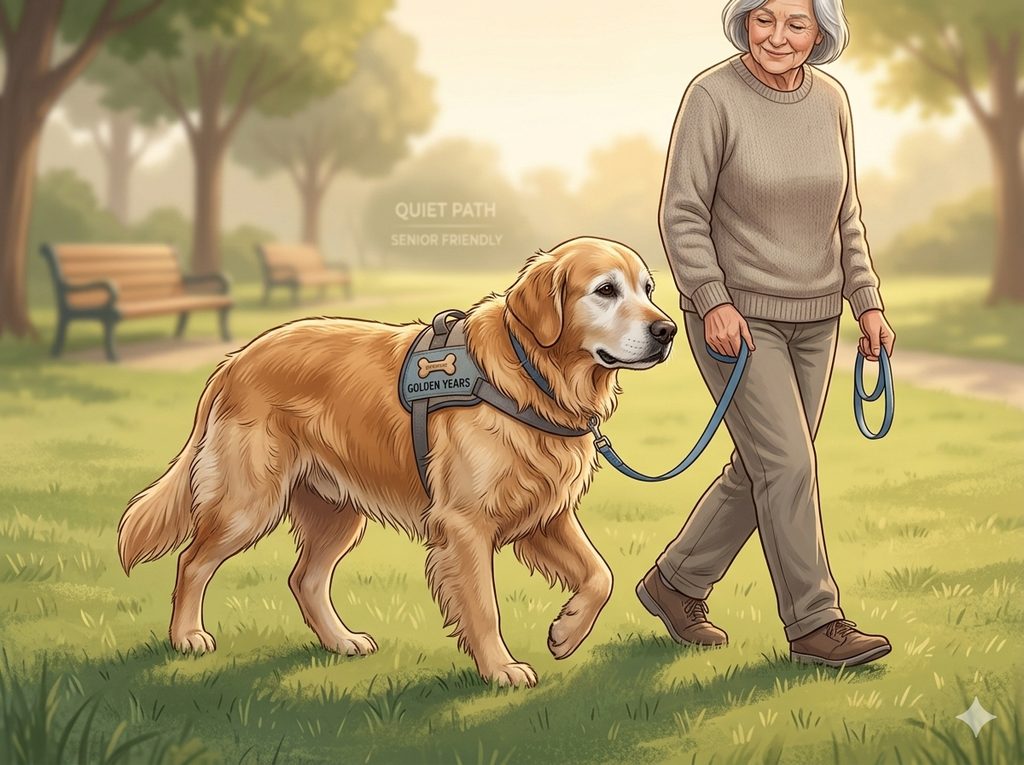
Senior dogs, especially those developing arthritis or other joint changes, still benefit from regular movement — the outdated idea that a stiff or aging dog should simply rest more doesn’t hold up well against current guidance. Canine arthritis researchers have found that dogs with hip arthritis who exercised more than 60 minutes a day showed lower lameness scores than dogs exercising less than 20 minutes a day, suggesting that appropriate activity supports mobility rather than undermining it.
The key word is “appropriate”: low-impact, controlled, and consistent rather than intense or sporadic. Shorter, more frequent walks (several 10-15 minute outings rather than one long one), swimming where available, and gentle strength-building exercises like sit-to-stand repetitions tend to be well-tolerated even by dogs with existing joint issues. Any new exercise routine for a senior dog with diagnosed arthritis is worth running by a vet first, since the right plan depends on which joints are affected and how severe the changes are.
Breed and Body Type Considerations
Exercise needs don’t just shift with age — they shift with what a dog’s body is built to handle. Our Brachycephalic Dog Care guide covers this in depth for flat-faced breeds like Tank, where airway limitations mean timing and intensity matter more than for the average dog regardless of life stage. Similarly, deep-chested breeds have their own exercise-timing considerations around meals (to reduce bloat risk), and giant breeds often have extended puppy growth-plate timelines that push “adult-level” exercise further out than owners expect. Generic exercise advice tends to assume an average-built, average-sized dog — worth remembering that your specific dog may need adjustments in either direction.
Signs You’re Overdoing It (At Any Stage)
A few signals apply regardless of age: limping or stiffness that shows up after activity rather than during it, reluctance to continue an activity the dog previously enjoyed, excessive panting or slowing down well before the activity is over, and soreness the following day. None of these are things to push through — they’re signals to scale back and, if they persist, get a vet’s input rather than assuming it will resolve on its own.
Weather and Environment Matter Too
Exercise tolerance isn’t purely about age and breed — heat, cold, and surface type all shift how much activity is appropriate on a given day, at any life stage. A young, healthy adult dog can still overheat on a hot, humid day if exercise timing and intensity aren’t adjusted, and a senior dog with early arthritis may struggle more on cold mornings when joints are stiffer than usual. Building in flexibility — a shorter walk on a rough day rather than forcing a set routine regardless of conditions — tends to serve dogs better than a rigid schedule that doesn’t account for how a specific day is actually going.
Mixing Physical and Mental Exercise
Physical exercise is only part of the picture at every life stage. A short walk paired with some scent work, a food puzzle, or a few minutes of training tends to leave a dog more satisfied than a longer walk with no mental component — this is especially useful for life stages where physical exercise is naturally limited, like early puppyhood or advanced senior years, when a dog’s body can’t do as much but their brain still needs something to work on. Our Dog Training guide covers positive reinforcement basics that double nicely as this kind of mental outlet regardless of a dog’s age or physical capacity.
Where This Fits Into Everything Else on Furrowise
This guide expands on the exercise section of our Dog Lifestyle Needs pillar page, and pairs with our Dog Training guide for owners building both exercise and training routines around a growing or aging dog. For breed-specific exercise adjustments, our Brachycephalic Dog Care guide covers the additional considerations flat-faced dogs need — the two guides are designed to be read together for that breed group specifically, since exercise and heat/airway management overlap so much for them.
Editorial Note: This article draws on veterinary guidance on canine growth plate development and published research on exercise and canine arthritis outcomes, alongside editorial analysis of that material. It is not based on hands-on testing of any product.
Disclaimer: This article is not veterinary advice. If your dog shows limping, stiffness, or reluctance to move that is new, persistent, or getting worse, please consult a vet.