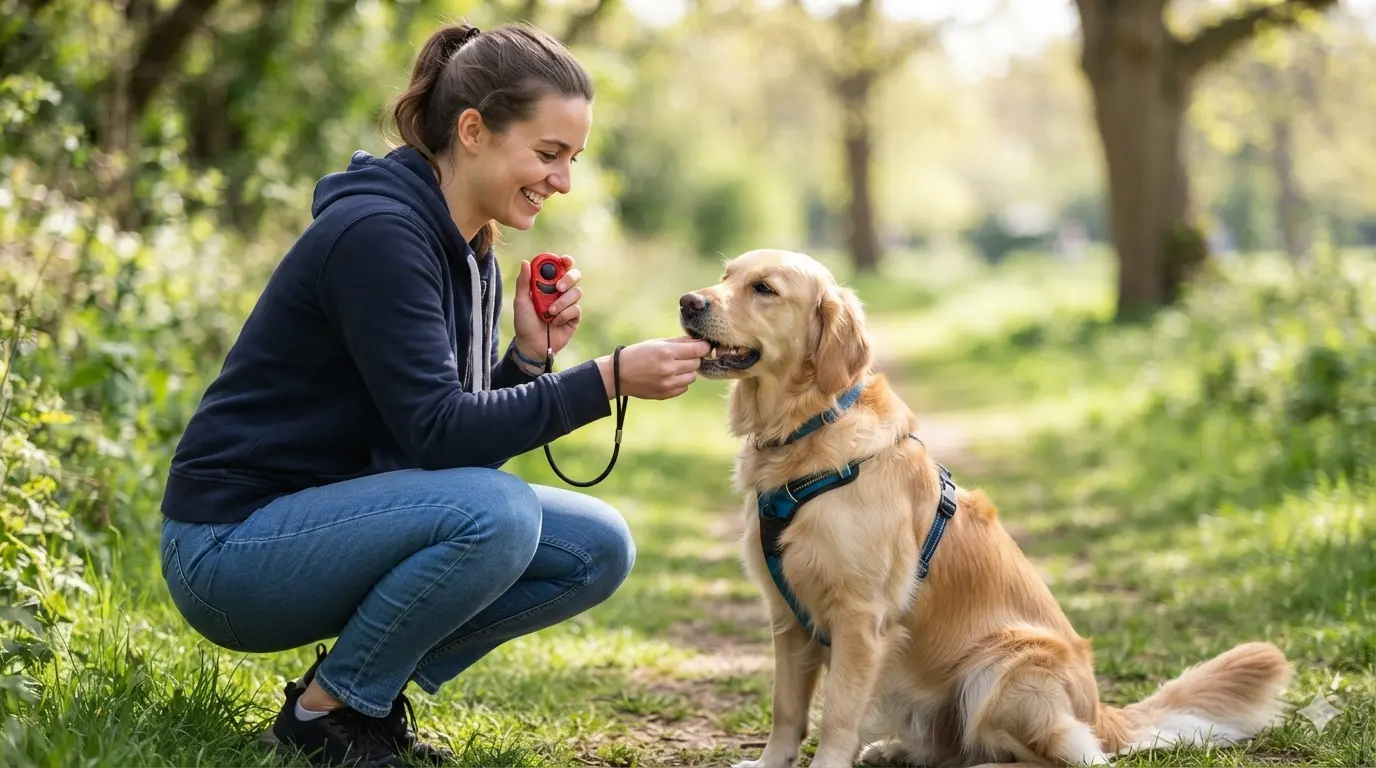
Our Dog Training guide covers positive reinforcement basics at a high level, but the mechanics underneath deserve their own space — because most people who say “positive reinforcement doesn’t work on my dog” are actually running into a timing, value, or consistency problem rather than a fundamental limitation of the method itself. This guide breaks down what’s actually happening when reinforcement-based training works, and where it commonly goes sideways, so troubleshooting a stuck training plan gets easier.
Understanding Positive Reinforcement Dog Training: The Actual Mechanism
The mechanism is simple to state and harder to execute well: a behavior happens, something the dog wants happens immediately afterward, and the behavior becomes more likely to happen again. Everything else in this guide is really just detail on how to make that simple loop work reliably in practice, since the theory is easy but the execution has more moving parts than it looks like at first — timing, reward value, consistency across people, and matching technique to the specific behavior being taught all affect whether the same basic mechanism produces fast, reliable results or a frustrating standstill.
Timing: The Single Biggest Factor
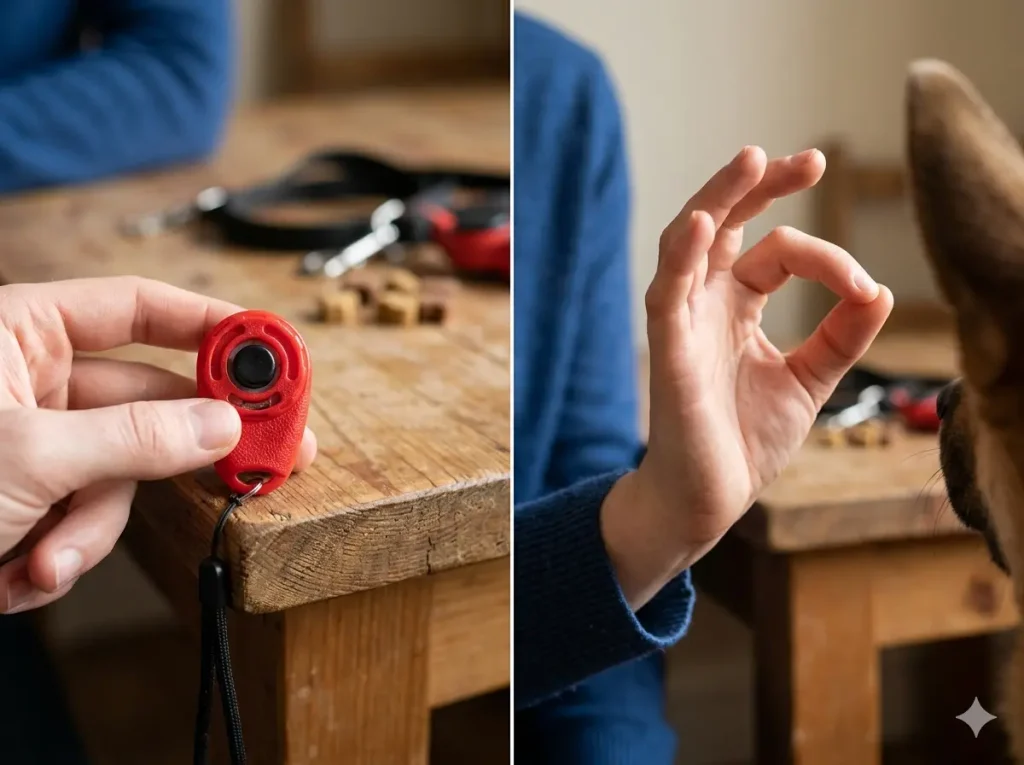
Timing matters more than almost anything else in positive reinforcement dog training. A reward delivered even two or three seconds late risks reinforcing whatever the dog is doing at that moment rather than the behavior you meant to reward — if a dog sits, then stands back up while you’re fumbling for a treat, a slow reward risks reinforcing the standing-up rather than the sit. This is the entire reason markers exist: a clicker or a consistent verbal marker (“yes,” “good”) can be delivered instantly at the exact moment of the correct behavior, then followed by the actual reward a moment later, bridging the gap between behavior and treat delivery.
Markers: Clicker vs. Verbal vs. No Marker at All
There’s a persistent belief that a clicker is inherently more effective than other options, but the research doesn’t support that as strongly as popular training culture suggests. A systematic review of clicker efficacy studies found that clickers are often no more effective than other secondary reinforcers (like a verbal marker) or even primary reinforcement alone, across multiple comparison studies conducted in different labs with different protocols. One frequently cited study comparing a clicker, a spoken word, and food alone found dogs in all three conditions learned and generalized a novel behavior to an equivalent degree.
The practical takeaway isn’t “don’t bother with a clicker” — some trainers and dogs genuinely do better with the sharp, consistent sound a clicker provides, and it removes any variability in how a verbal marker is said. It’s that a clicker isn’t a magic tool that outperforms a consistent verbal marker; picking whichever option you’ll use accurately and consistently matters more than which specific tool you choose.
Reinforcement Value and Variable Rewards
Not all rewards are equal, and treating them as interchangeable is one of the more common reasons training stalls. A treat that’s motivating in a quiet living room may not compete with the distraction of another dog, a squirrel, or a busy sidewalk — matching reward value to the difficulty of the environment (higher-value treats for harder distractions) keeps the reinforcement loop functional instead of asking a dog to work for a low-value reward against high-value competition.
Varying reward value unpredictably — sometimes a regular treat, occasionally a genuinely high-value “jackpot” reward for an especially good response — tends to keep behaviors more durable over time than a fixed, predictable reward every single time. This mirrors a broader principle in behavioral science: unpredictable reward schedules tend to make a behavior more resistant to fading than a reward that’s exactly the same every time, which is part of why a behavior trained purely with a jackpot-free, identical reward can sometimes fade faster once real-world rewards become less frequent than they were during initial training.
Shaping vs. Capturing vs. Luring
Three common techniques get lumped together as “positive reinforcement training,” but they work differently, and knowing which one fits a given situation saves a lot of frustration:
Capturing means waiting for a behavior the dog does naturally (lying down, sitting) and rewarding it the moment it happens, gradually attaching a cue once the dog reliably offers the behavior.
Shaping means rewarding successive small steps toward a target behavior the dog isn’t already doing — rewarding a nose moving toward a target object, then closer, then touching it, building up to the full behavior in increments.
Luring means using a treat or toy to physically guide a dog into a position or motion (leading a dog’s nose down and back to prompt a sit), then fading the lure once the behavior is reliable.
None of these is universally “better” — capturing works well for behaviors a dog already does; shaping tends to work better for complex or unusual behaviors a dog wouldn’t stumble into on their own; luring is often the fastest way to get an initial response, though it requires a deliberate fading step so the dog doesn’t become dependent on seeing the treat before responding. Many trainers end up combining all three across a dog’s training history rather than committing to just one, matching the technique to whatever specific behavior is being taught at the time.
Common Mistakes That Undermine Positive Reinforcement
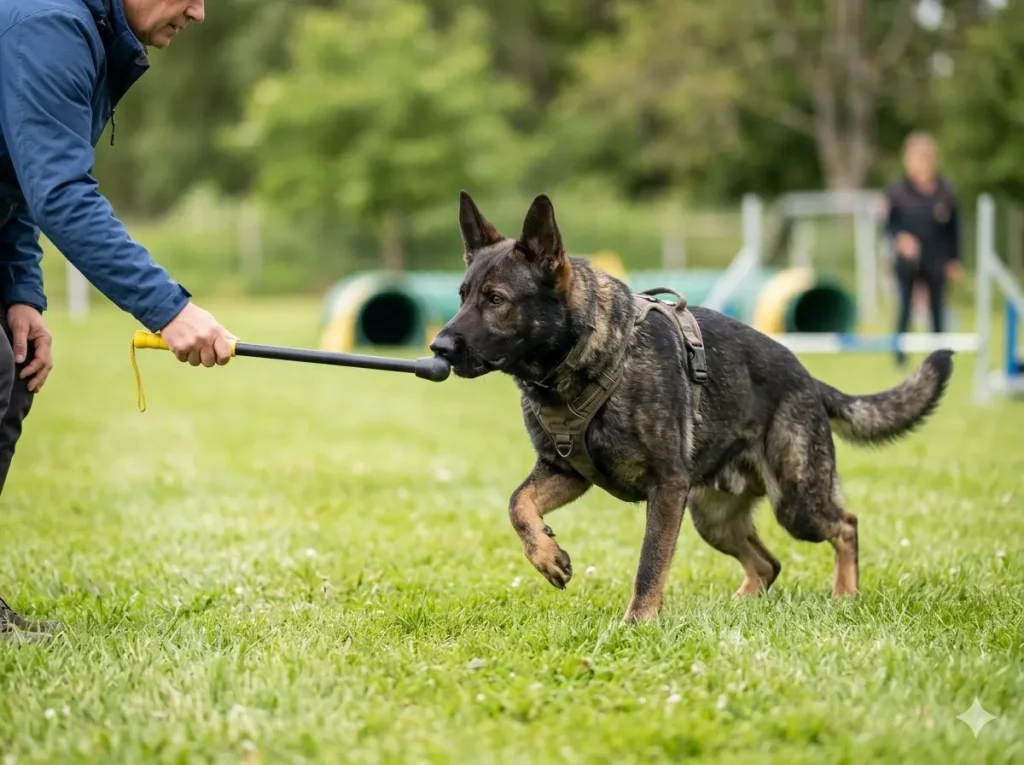
A few patterns quietly sabotage reinforcement-based training even when the overall approach is sound: rewarding inconsistently across different family members (one person reinforces jumping, another doesn’t, and the dog gets mixed signals), accidentally reinforcing an unwanted behavior by giving attention to it (a dog who barks for attention and gets picked up to be calmed down just learned that barking works), and asking for a behavior in a harder environment than the dog has actually been trained for yet. None of these reflect a training method failing — they reflect the mechanism being applied inconsistently, which is usually fixable once identified rather than a sign the whole approach needs rethinking.
Another common mistake is quitting a session too late, past the point where a dog is still engaged and successful. Ending on a string of correct responses, even if that means a shorter session than planned, tends to build more confidence and enthusiasm for the next session than continuing until the dog starts making mistakes from fatigue or waning focus. A session that ends on failure teaches a dog that training sometimes goes badly, which isn’t the association most owners actually want to build.
Overusing a single reward type is a subtler issue: a dog fed the exact same treat for every single training session across months can lose some motivation for it, the same way a person might get tired of eating the same meal daily. Rotating between a few different high-value rewards — different treats, occasionally a quick play session instead of food — tends to keep motivation higher over the long run than relying on one option indefinitely.
When Physical or Mental State Affects Learning
A dog who’s overtired, overheated, or under-exercised doesn’t learn as well regardless of how well the reinforcement mechanics are executed. Our Dog Exercise by Life Stage guide covers how physical and mental exercise needs shift across a dog’s life — a dog whose exercise needs aren’t being met is often a harder training subject not because the method has failed, but because their capacity to focus and engage is compromised. This matters even more for breeds with additional physical constraints; our Brachycephalic Dog Care guide covers why short, cool-weather training sessions work better than long ones for flat-faced breeds, since heat and airway strain reduce a dog’s ability to engage with training long before it becomes an emergency.
None of the mechanics above override the broader framework professional veterinary behavior organizations have settled on. The AVSAB position statement on humane dog training takes the formal position that reward-based methods should be used for all training, including behavior problems, and that punishment-based approaches carry welfare risks without demonstrated necessity. Everything in this guide operates inside that framework — refining how reinforcement is delivered, not questioning whether reinforcement-based training itself is the right foundation to build a training relationship on.
Where This Fits Into Everything Else on Furrowise
This guide expands on the reinforcement mechanics touched on in our Dog Training guide. For the physical and mental readiness side of training success, our Dog Exercise by Life Stage guide and Brachycephalic Dog Care guide cover the factors that affect how well a dog can actually engage with any training session.
Editorial Note: This article draws on the AVSAB position statement on humane dog training, a systematic review of clicker training efficacy studies, and editorial analysis of that material. It is not based on hands-on testing of any product.
Disclaimer: This article is not veterinary or professional behavioral advice. If your dog is showing signs of aggression, severe fear, or a sudden behavior change, please consult a vet or a certified professional trainer/behaviorist.